
How to Research & Buy Your First RV
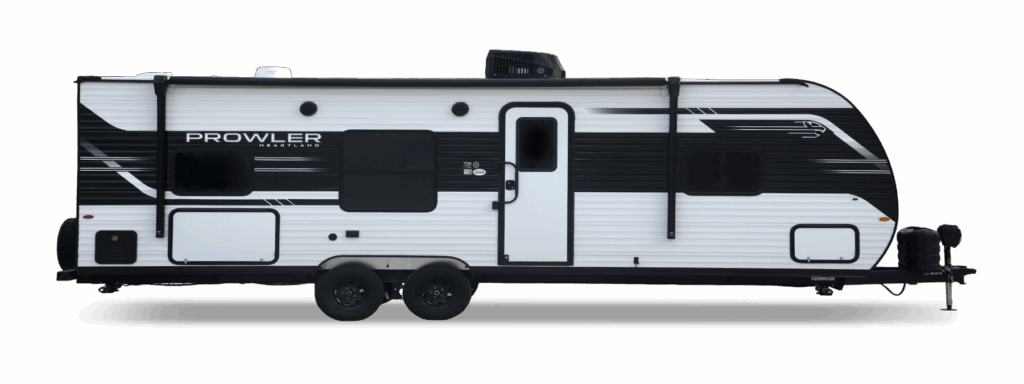
Travel Trailers
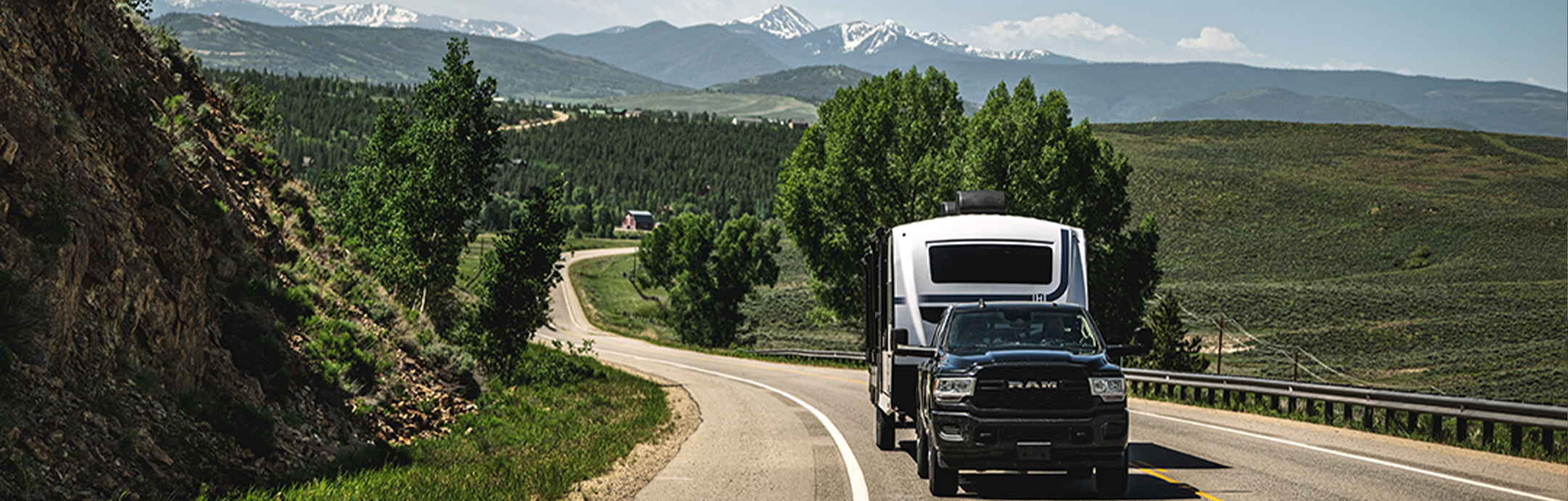
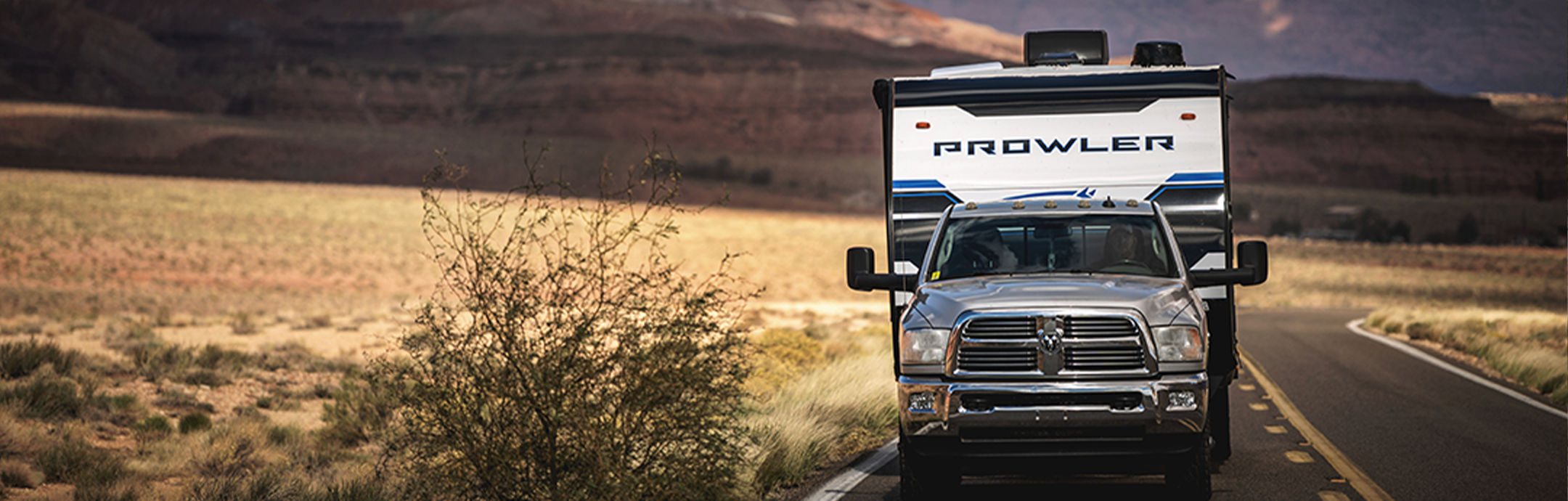
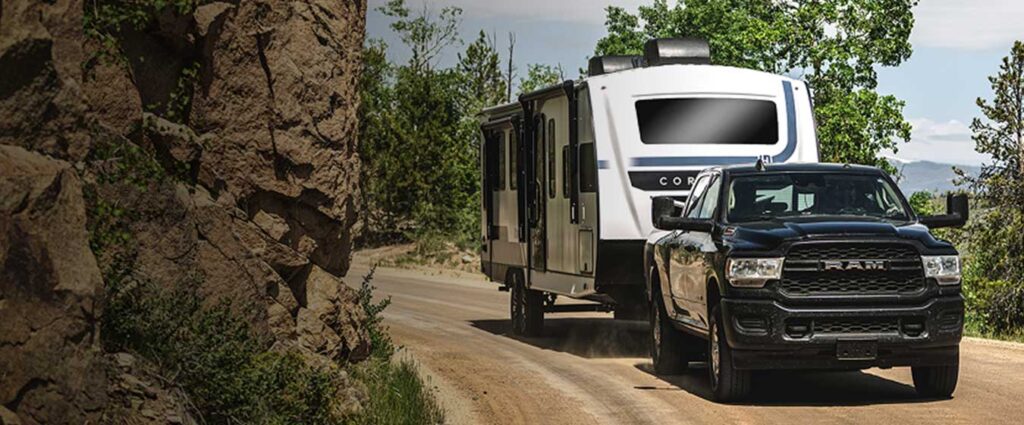
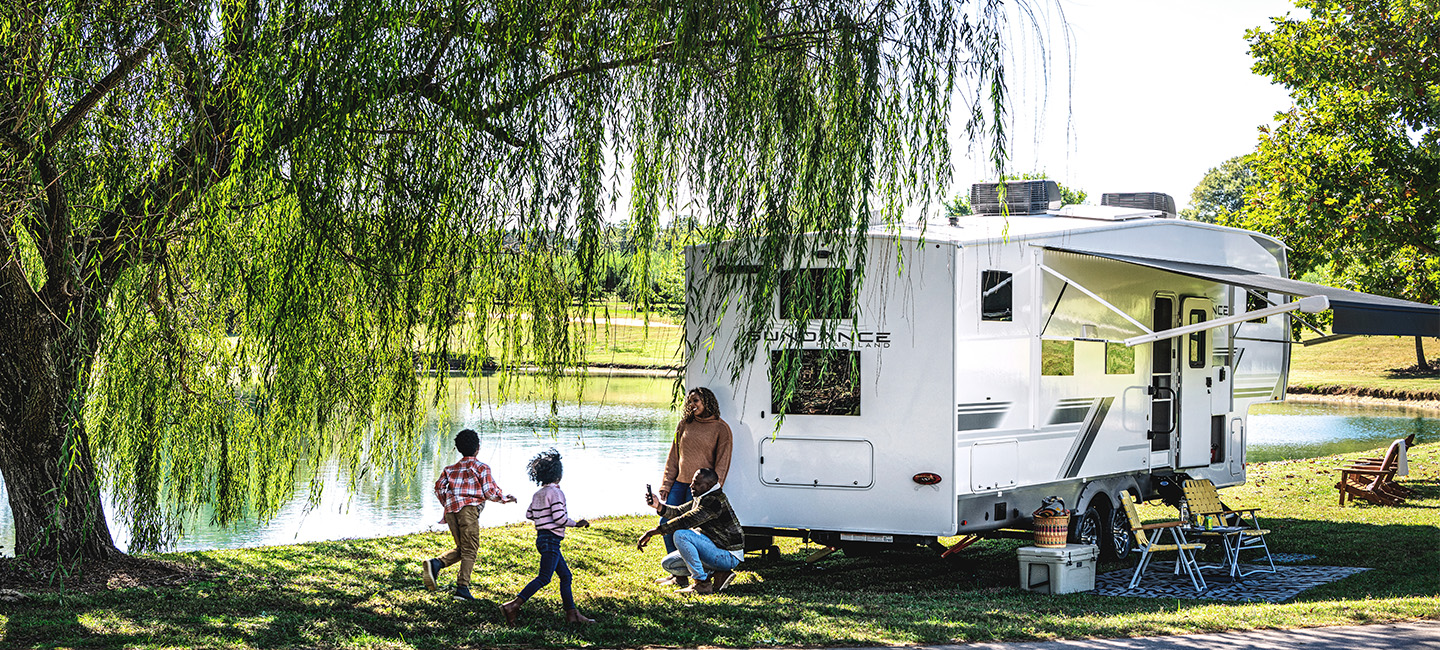
Lightweight and Flexible Towable RVsA travel trailer is a towable RV designed to be pulled behind a truck or SUV using a hitch mounted to the rear bumper — often referred to as a “bumper pull.” Travel trailers are one of the most popular and versatile RV types because they come in a wide range of sizes, floorplans, and weight ratings.
Many smaller travel trailers are SUV towable, making them a great option for first-time RV buyers or families who don’t want to upgrade their vehicle. Larger travel trailers offer expanded living space, residential-style features, and increased storage, but may require a truck with higher towing capacity.
Travel trailers provide flexibility, affordability, and the convenience of unhitching at your campsite so you can use your tow vehicle separately.
5th Wheels
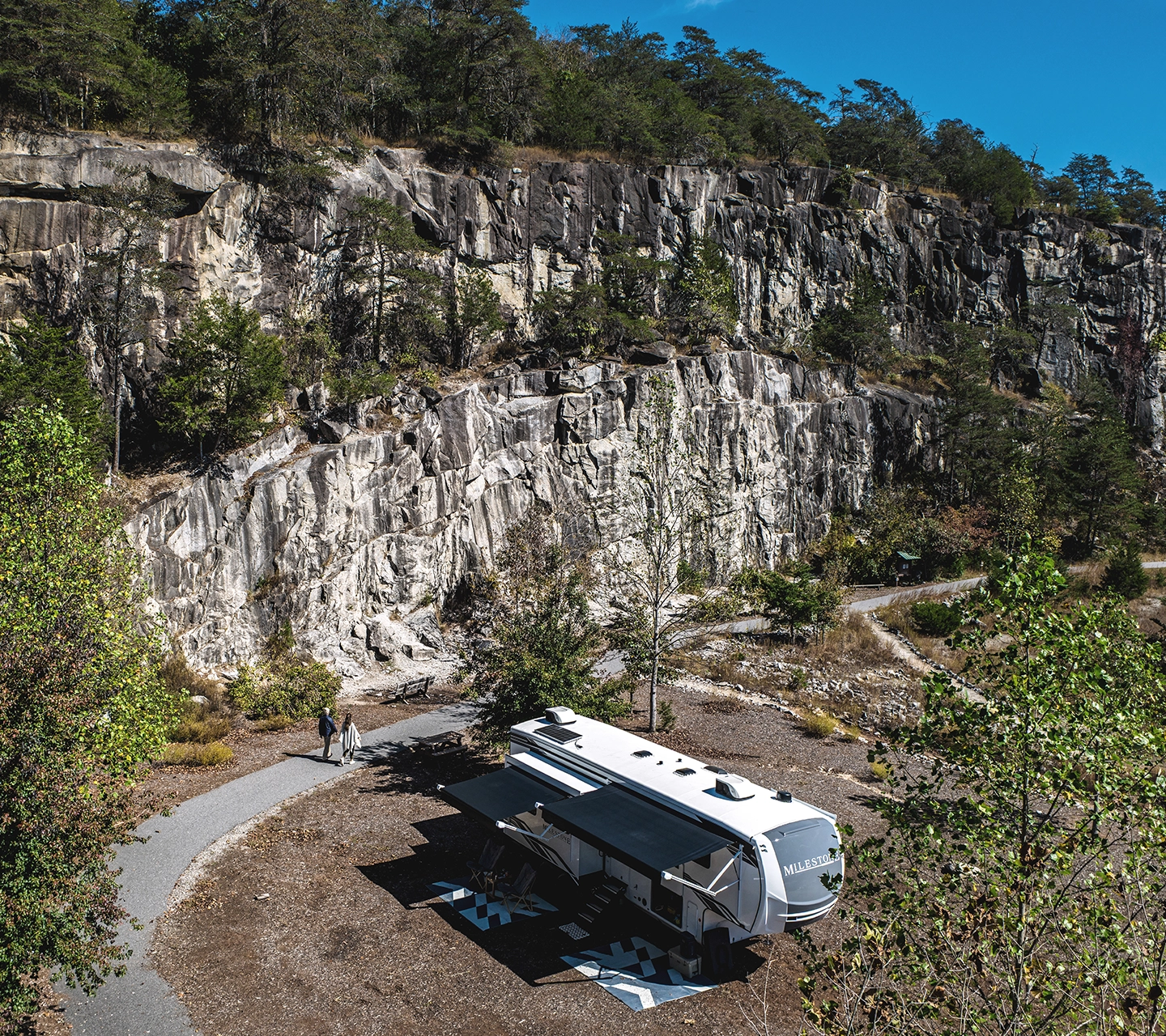
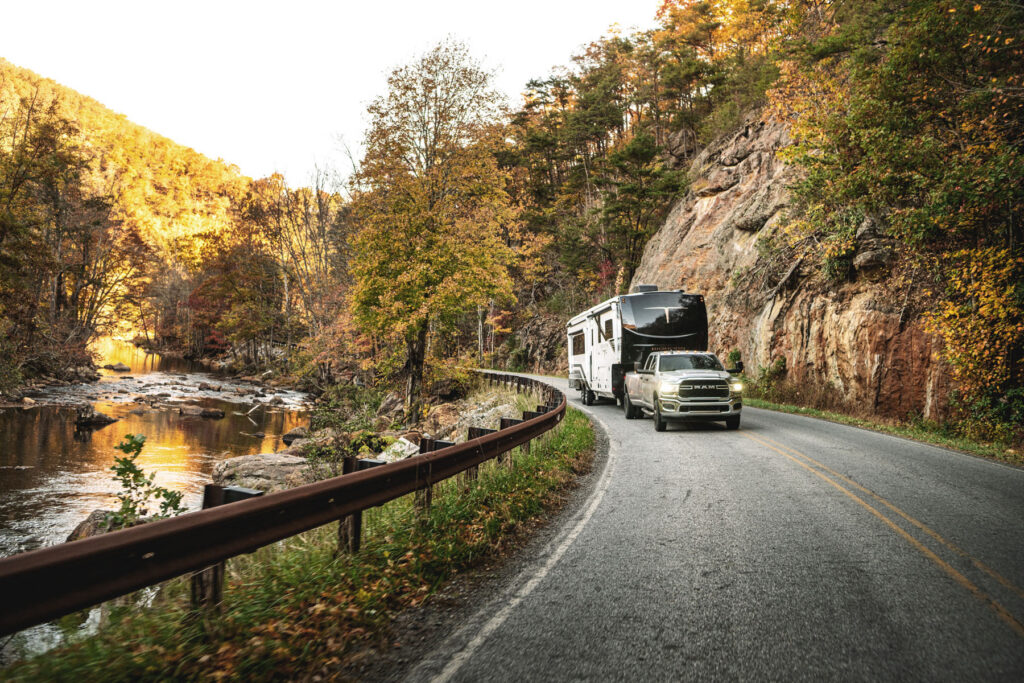
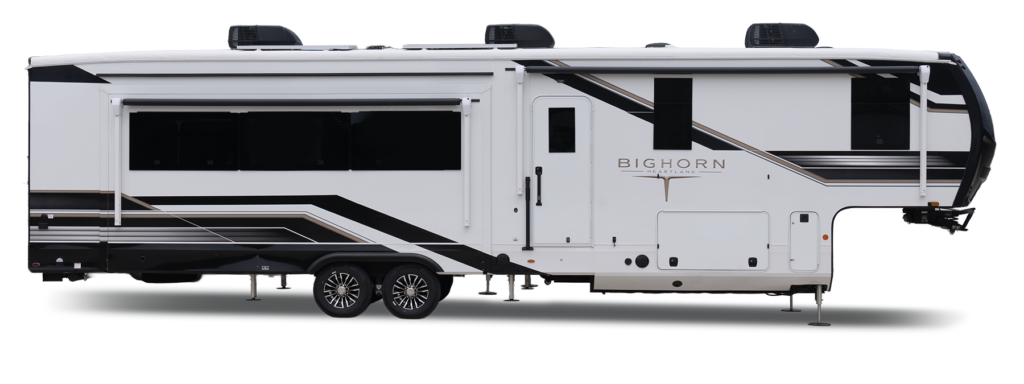
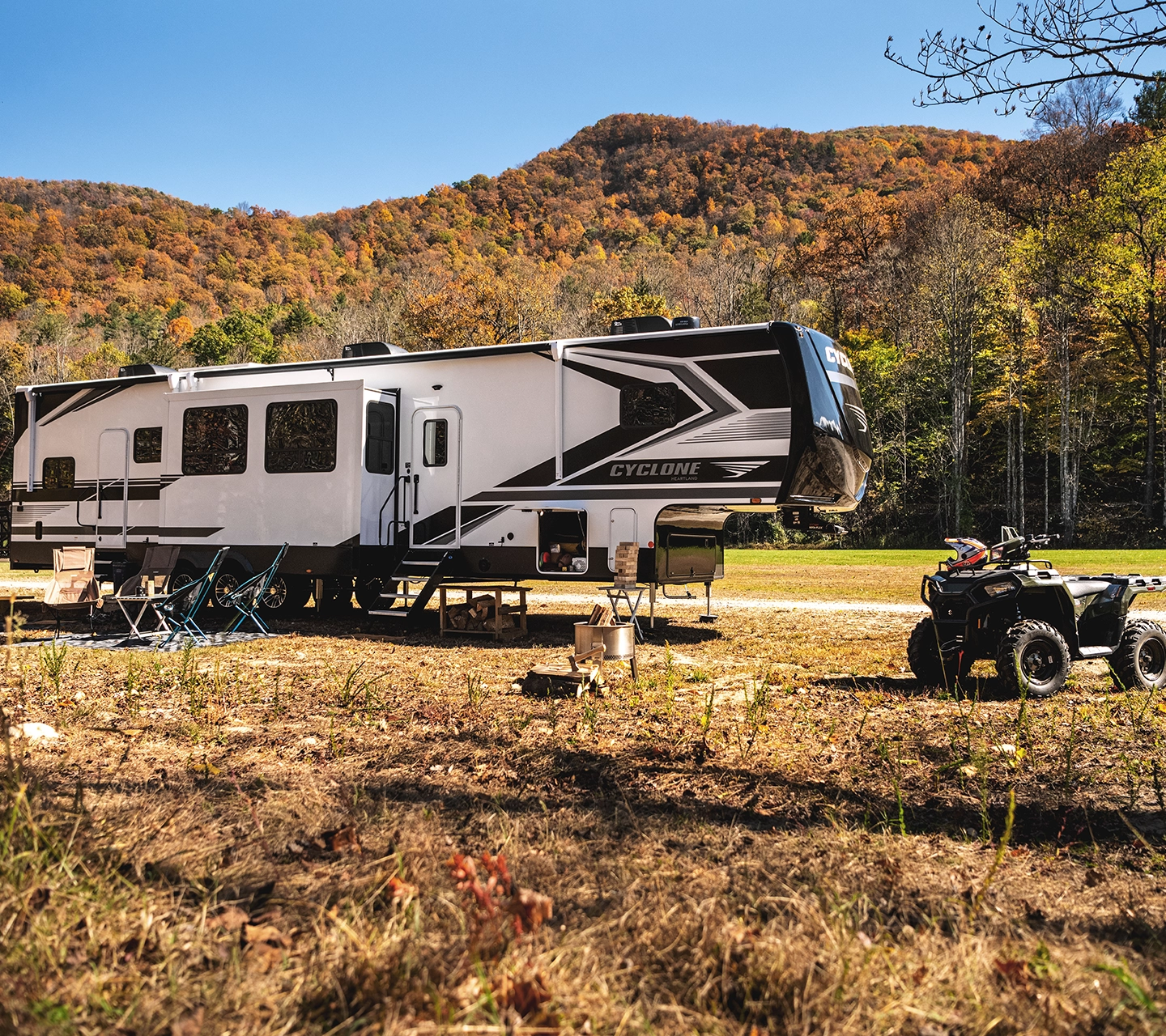
Luxury Towable RVs Built for Longer StaysA fifth wheel is a towable RV that connects to a specialized hitch mounted inside the bed of a heavy-duty truck. Unlike traditional bumper pull travel trailers, the fifth wheel hitch sits over the rear axle of the truck, creating improved balance, reduced sway, and a smoother towing experience.
Because of this design, fifth wheels are often easier to maneuver and more stable on the road — especially for longer trips or full-time RV living.
Fifth wheels are typically larger than travel trailers, offering:
-
Spacious multi-level floorplans
-
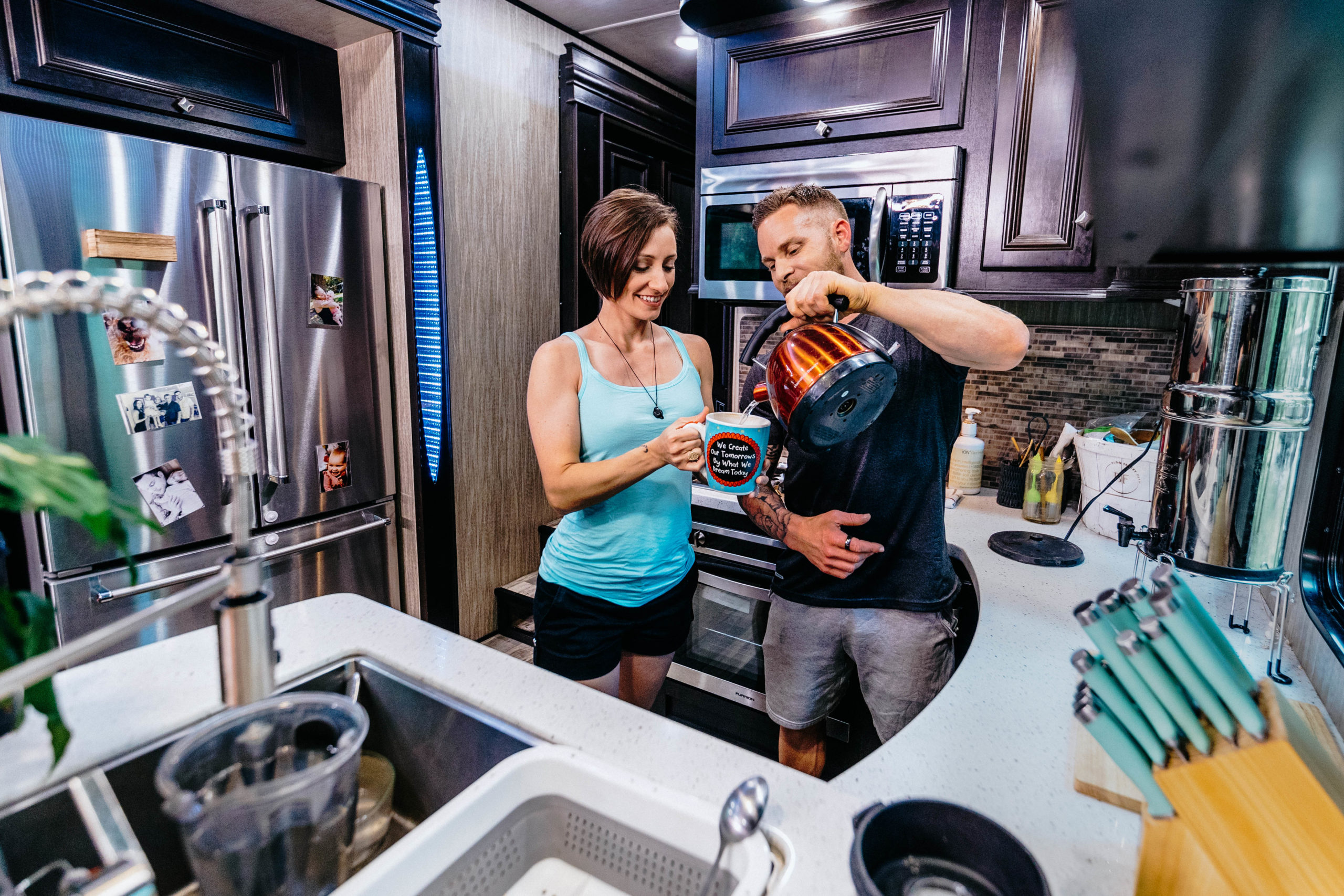
Residential-style kitchens and living areas
-
Larger bathrooms and private master suites
-
Expanded storage capacity
While they require a truck equipped with a bed-mounted hitch, many RV buyers choose fifth wheels for their luxury feel, towing stability, and extended-stay comfort.
If you’re comparing RV types, a fifth wheel is ideal for families, full-time RVers, or anyone looking for maximum space and residential amenities on the road.
Toy Haulers
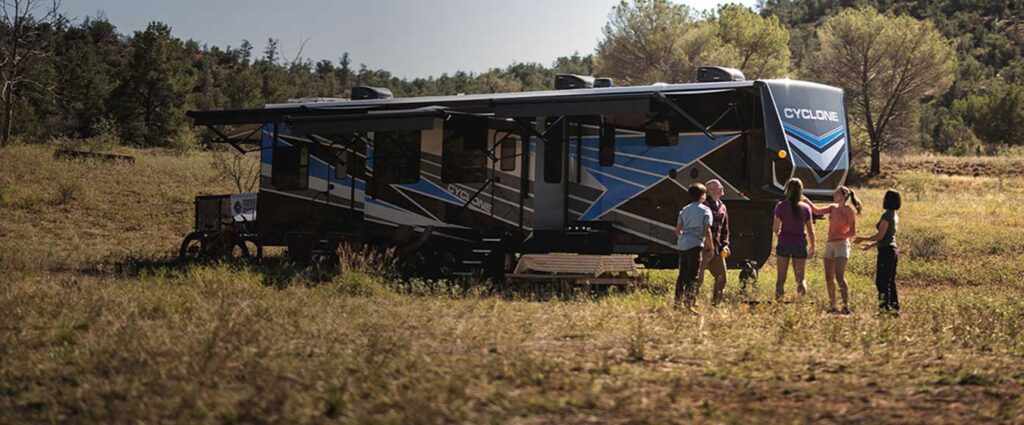
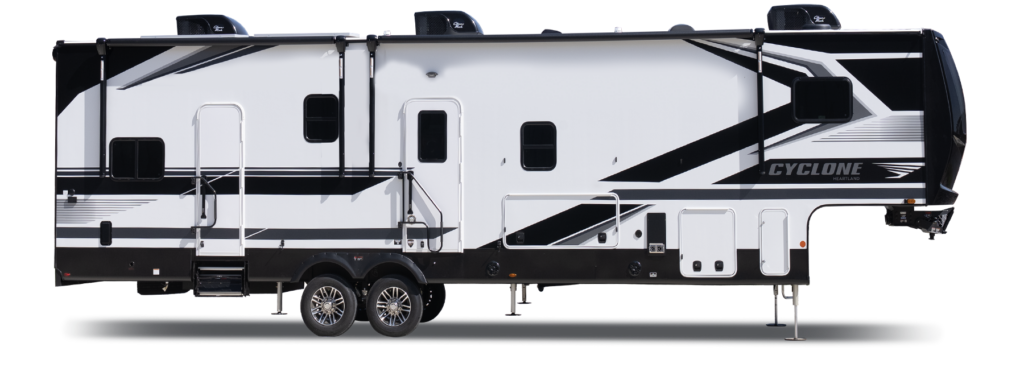
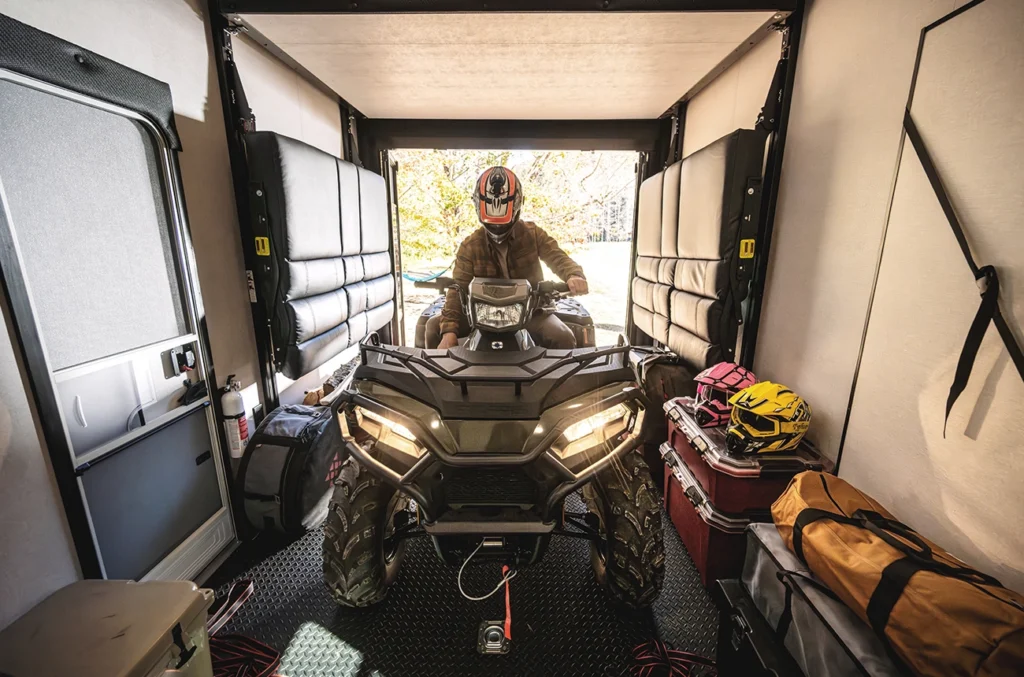
RV Living with Built-In Garage SpaceA toy hauler is a versatile RV designed with a built-in garage space to transport motorized equipment like ATVs, motorcycles, dirt bikes, golf carts, or even kayaks and e-bikes.
The rear of the RV features a large ramp door that allows you to easily load and unload your gear. At the campsite, that same ramp can convert into a patio deck for added outdoor living space. Some toy haulers even include optional side patios to maximize entertaining space.
Toy haulers are available in both:
-
Travel trailer (bumper pull) configurations
-
Fifth wheel toy hauler models
Beyond the garage, toy haulers function like fully equipped RVs, offering kitchens, bathrooms, sleeping areas, and residential-style comforts. Many models also feature flexible garage spaces that convert into bunk rooms, offices, or guest suites.
Toy haulers are ideal for adventure-focused RVers who want to bring their toys—without sacrificing comfort.
What to Consider For Your First Time Purchase
Buying your first RV is exciting—but it can also feel overwhelming. With so many options available, the key is focusing on what matters most for your lifestyle, budget, and travel plans.

Core Factors for Choosing the Right RV
When choosing the right RV, start with these core factors:
Budget
Your overall cost goes beyond the purchase price. Consider insurance, storage, maintenance, campground fees, and fuel. Knowing your comfort zone financially will help narrow your options quickly.
Sleeping Capacity
How many people will typically travel with you? Think about both everyday trips and the occasional guests. RVs range from cozy couple-friendly layouts to bunkhouse floorplans designed for families.
Motorized vs. Towable
Do you prefer driving your RV, or towing it behind a truck or SUV?
- Motorized RVs offer convenience and an all-in-one driving experience.
- Towable RVs (travel trailers, fifth wheels, toy haulers) provide flexibility since you can unhitch and use your tow vehicle separately.
Towing Capacity
If you’re choosing a towable RV, your vehicle’s towing capacity is critical. Always verify your truck or SUV’s ratings before selecting a floorplan.
How You Plan to Use It
Weekend getaways? Full-time RVing? Off-grid adventures? Tailgating? Your intended use should guide layout, storage needs, tank sizes, and feature priorities.

Additional Considerations
Once you’ve answered the big questions, you can refine your choice even further:
- Will you be boondocking or staying at full-hookup campgrounds?
- What climates will you camp in—warm-weather only or four-season travel?
- How comfortable are you driving or towing a larger RV?
- Do you want residential-style features or something more lightweight and compact?
The good news? Nearly every type of RV comes in a variety of sizes and sleeping capacities. By focusing first on lifestyle, budget, and towing needs, you can quickly narrow your options and confidently move toward the right RV for you.
Considering Your Budget
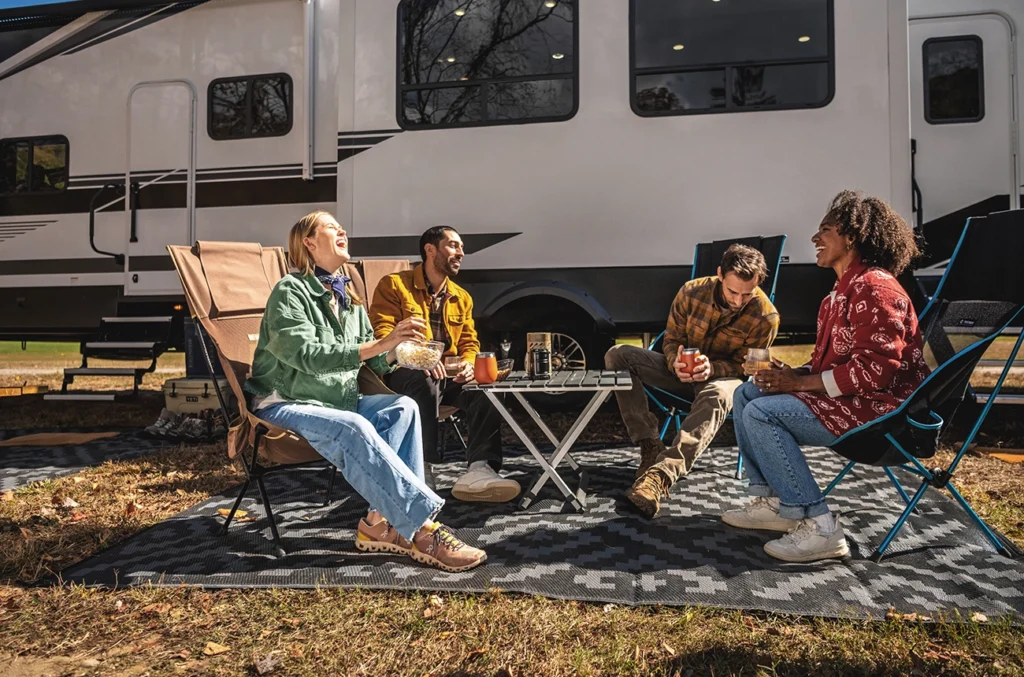
Like any major purchase, your budget will drive what kind of RV fits your lifestyle. With so many different styles of RV, prices run the gamut. You’ll find relatively inexpensive tiny travel trailers to large and luxurious Class As. Even within segments, there are floor plans and upgrade packages to fit everything you’re looking for, whether you want something minimal and value-driven or packed with high-tech features and opulent touches. Because most RV manufacturers don’t sell directly to consumers, always confirm the final prices of any unit you’re researching with your preferred dealer.
Motorized
- Class A RVs start on the low end at $50,000 and can go up to millions of dollars for top-of-the-line, luxury models.
- Most Class B RVs range from $40,000 to $80,000 for basic models, and can cost six figures for more custom configurations or high-end details.
- Midsize Class C RVs average between $50,000 and $100,000, but can include more expensive RV models from luxury manufacturers.
Towable RVs
- In general, towables offer more affordable options because of the wider variety of sizes.
- Small travel trailers can be found for as low as $8,000, but average around $20,000.
- An average, standard sized travel trailer will run you around $35,000.
- Toy haulers and fifth wheels tend to be a little more expensive due to the features they offer. Toy haulers start around $40,000 and fifth wheels average $75,000 to $100,000, brand new.
- And with hundreds of floor plans and packages, you can find travel trailers that range from minimal and streamlined to those with luxury amenities.
If you’re researching travel trailers, two of the biggest considerations are the trailer weight and your towing power. As you begin researching, you have two options. You can look for a trailer light enough to tow with a vehicle you currently own. Or you can plan on purchasing a new SUV or truck that has a higher towing capacity.
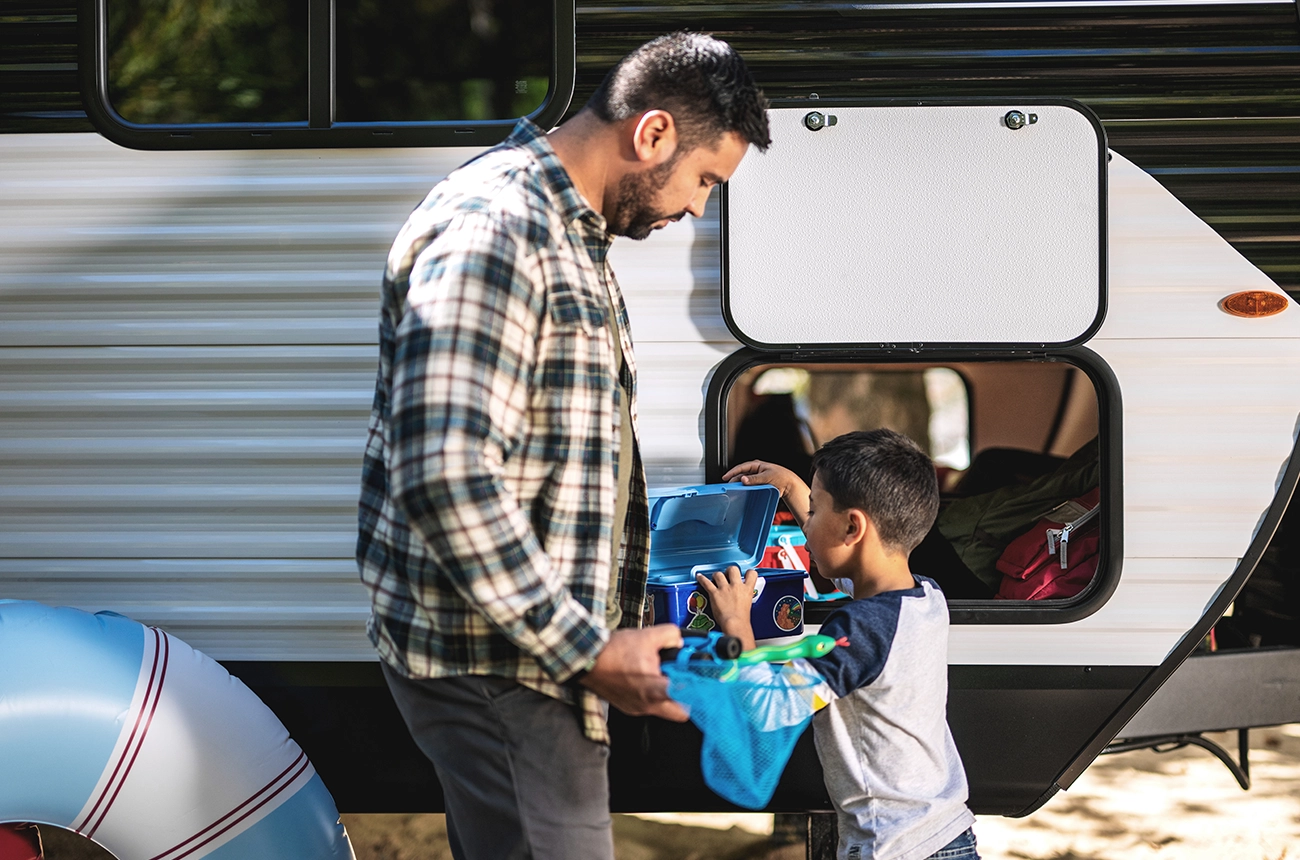
While you need to know the weight of the travel trailer itself, also keep in mind the cargo. Everything that goes into the trailer and tow vehicle needs to be factored into the towing equation. That includes the weight of full onboard tanks of water and gas, the weight of all the cargo you plan to bring with you, and even the weight of every passenger you’ll carry in the tow vehicle. Most RV specs list dry or unloaded weight. So you’ll need to take into account the weight of tanks, batteries or cargo.
Tow Vehicles
You need the right tow vehicle to match a trailer. If you buy anything other than a small trailer, you’re venturing firmly into truck territory.
Trucks are classified by their power and capacity, and these classifications go by a few different names. You may know them as “light duty,” “medium duty” and “heavy duty” trucks, as outlined by the Federal Highway Administration. While each truck classification has different towing capacities, they all provide similar vehicle features and serve as a preferred tow vehicle option––if you’re choosing to tow using a semi truck or tractor trailer, you would be required to have a commercial license.
People might also refer to truck classifications in tons: half ton, three-quarter ton, and one ton trucks. These names no longer refer to the actual capacity of a truck, as payload capacity has gone up over time while the names remained the same. But it’s useful to know these terms that people still throw around in conversation.
Trucks are classified into this system by their gross vehicle weight rating (GVWR). This just means the total weight a truck can move. It includes both the weight of the truck itself and anything inside. For instance, the weight of fuel, the driver, all passengers and any accessories. GVWR does not measure how much weight a truck can tow, just a truck’s general capacity.
Best Selling Tow Vehicles
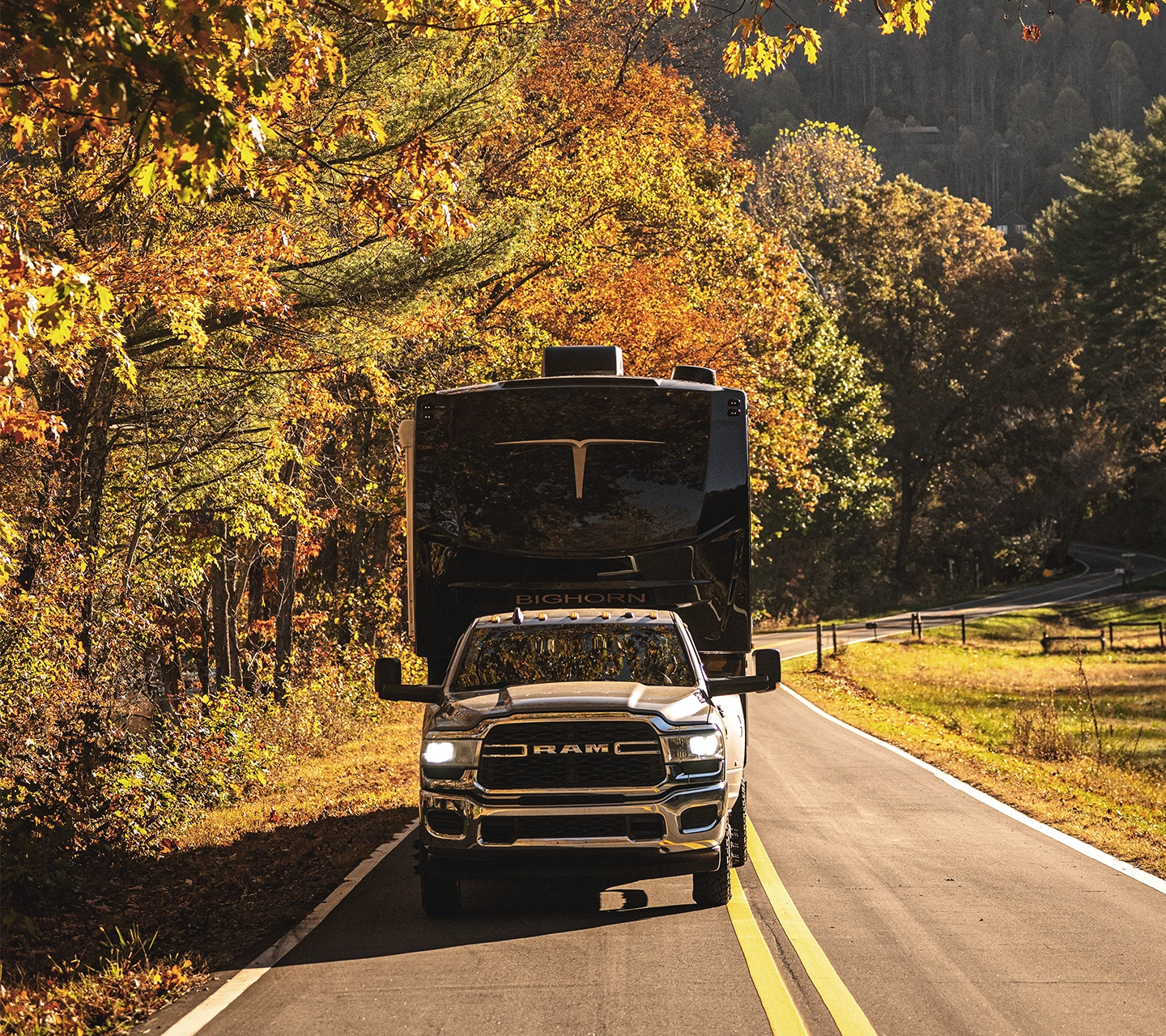
Here are some of the best-selling trucks in the US and their capacity classifications:
- Light duty/half-ton: Ford F-150, Chevrolet Silverado 1500, GMC Sierra 1500, RAM 1500, Toyota Tundra, Nissan Titan
- Medium duty/three-quarter ton: RAM 2500, Ford F-250, Chevrolet Silverado 2500, GMC Sierra 2500
- Heavy duty / one ton: RAM 3500, Ford F-350, Chevrolet Silverado 3500, GMC Sierra 3500
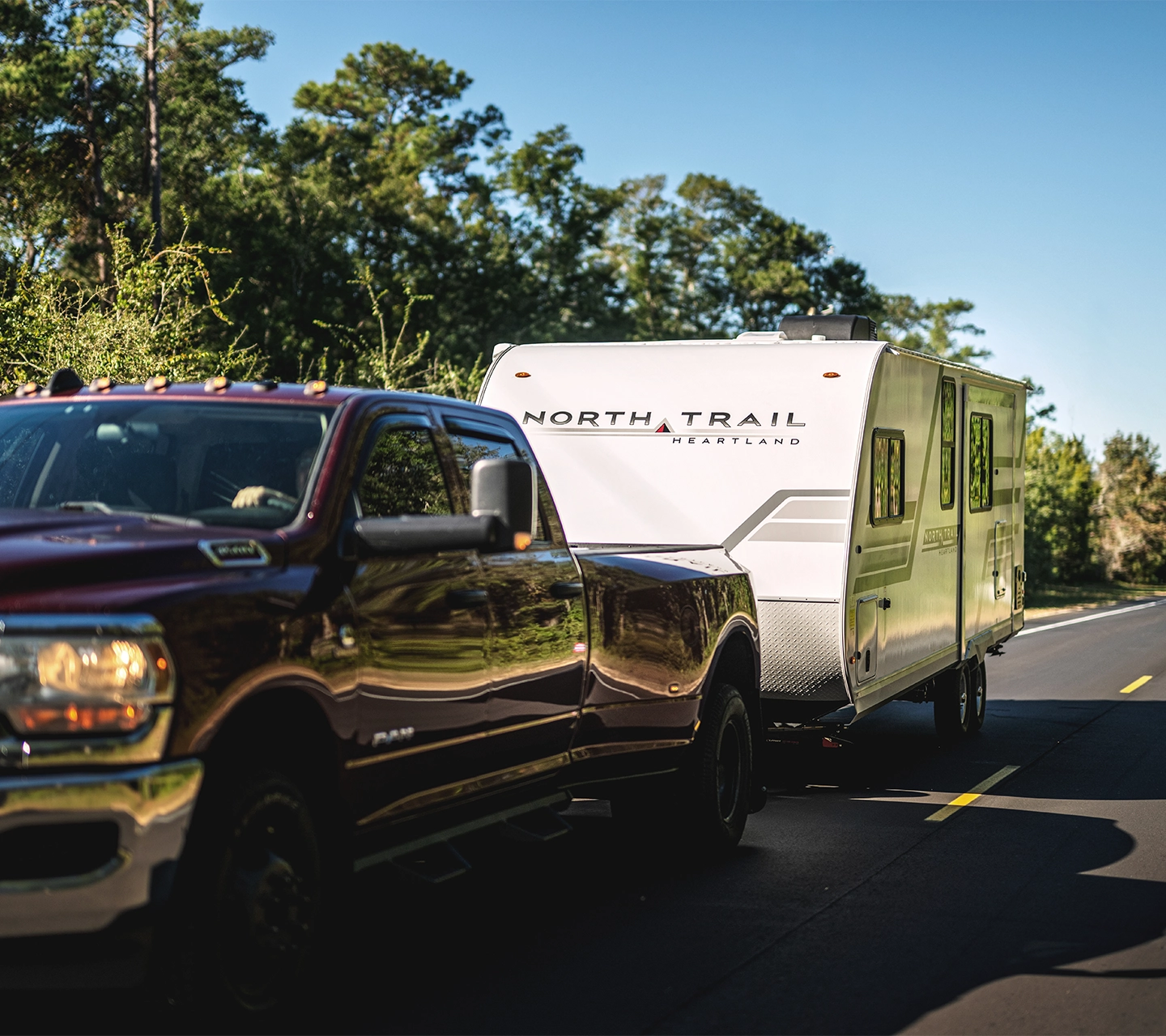
Our 33-foot travel trailer has a weight of 7,500lbs fully loaded. And our Ford F150 with the max tow package does the towing. If you wanted to tow a 44-foot, triple-axle toy hauler that hit 20,000lbs when fully loaded, you would want a heavier duty one-ton truck like a Ram 3500 or F350 or equivalent. (Fun fact: heavier duty trucks with dual rear wheels are sometimes called “duallys.”)
Calculate Towing Capacity
There are many handy calculators online that allow you to plug in a tow vehicle to find out how much weight it can tow. Just keep in mind that the weight will need to include the weight of the RV and everything inside it. Don’t leave out full tanks of water, propane and waste tanks, cargo, accessories, tools and any toys you bring along for the ride.
(What the heck is a toad?)
A toad is the opposite of a tow vehicle––a vehicle that gets “towed” behind a motorized RV. (Get it? Towed = Toad.) Most people who opt for Class As or larger Class Cs bring a toad car. Toads are also referred to as dinghys. They’re useful for getting around town without having to pack up and move your RV every time you need to hit the grocery store. Toads range from cars up to crossovers and smaller SUVs. For instance, the Jeep Wrangler proves a popular choice for people who love off-roading. More laid back campers might go for a compact car they use for sightseeing.
Intended Vehicle Use
Full-Time RVing
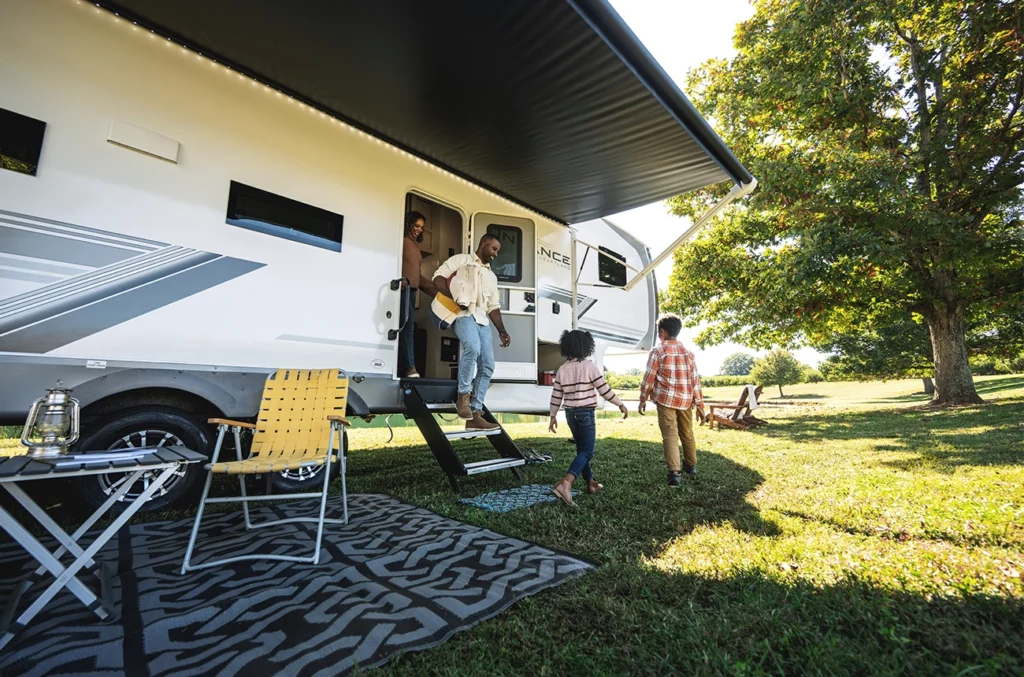
If your RV will be your primary home, prioritize residential-style amenities, ample storage, larger tanks, strong insulation, and a warranty that supports full-time use. Comfort and durability matter most when you’re RVing on the road year-round.
Extended or Seasonal Stays
For longer campground stays, look for spacious layouts, slide-outs, and home-like features that make extended trips more comfortable.
Weekend & Occasional Trips
If you’re camping a few times a year, a lightweight, easy-to-tow RV with practical features may be the best fit. Focus on value, simplicity, and convenience.
Adventure & Off-Grid Travel
Planning to boondock or bring along outdoor toys? Consider solar options, larger freshwater capacity, and rugged construction designed for more remote travel.
Defining how often—and how far—you plan to travel will quickly narrow your options and help you choose an RV that fits your lifestyle.
Questions To Ask Yourself
When you camp, do you like having all the comforts of home? Or do you enjoy going off-grid and roughing it? (Maybe both?) Class A RVs are huge and can come in really luxurious configurations. You’ll find gourmet kitchens, full-size bathrooms and slide-outs that offer maximum room to spread out. But if you like camping off-grid, a Class A may be too unwieldy to reach remote boondocking sites, and a full-size fridge can zap a lot of power. So you may be better off prioritizing a unit that has big water tanks and onboard generators over cushier details.
Finally, are you the kind of person looking to hit the road with your ATV, motorcycle, golf cart or other big, non-motorized toys like kayaks or canoes? A toy hauler has a ramp off the back that makes loading and unloading gear easy and quick. But lots of bigger families also love toy haulers because the garage space can be converted into an all-purpose room. We’ve seen the garage used as an extra bedroom, a playroom, a classroom, an office, even a gym. Toy haulers are a bit more expensive but supremely flexible for people looking to get creative.
Determining Size
Finally, size can play a big role in choosing your RV. Many people want a smaller RV or travel trailer because they’re easier to tow and park. They can also be more nimble in rougher terrains, such as on unpaved roads or boondock campsites. However, the special hitch on a fifth wheel can help mitigate some of the intimidation of towing a larger trailer, and many people choose to upgrade to a larger size once they’ve been RVing for a while.
Disclaimer: Max towing varies based on cargo, vehicle configuration, accessories, and number of passengers. See the owner’s manual for all vehicles and accessories before towing.