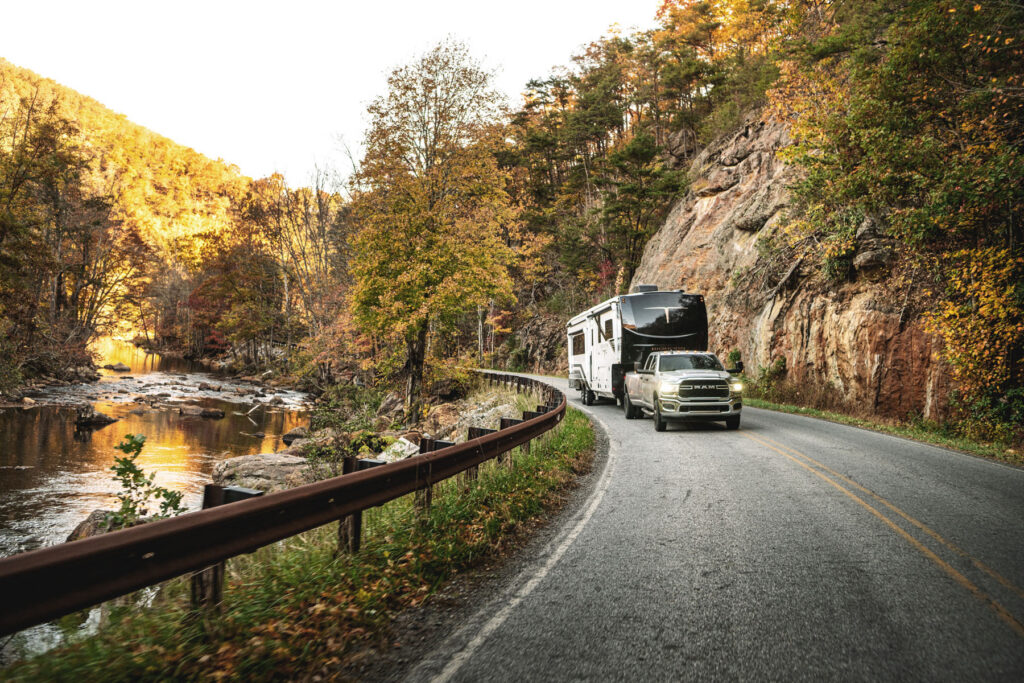

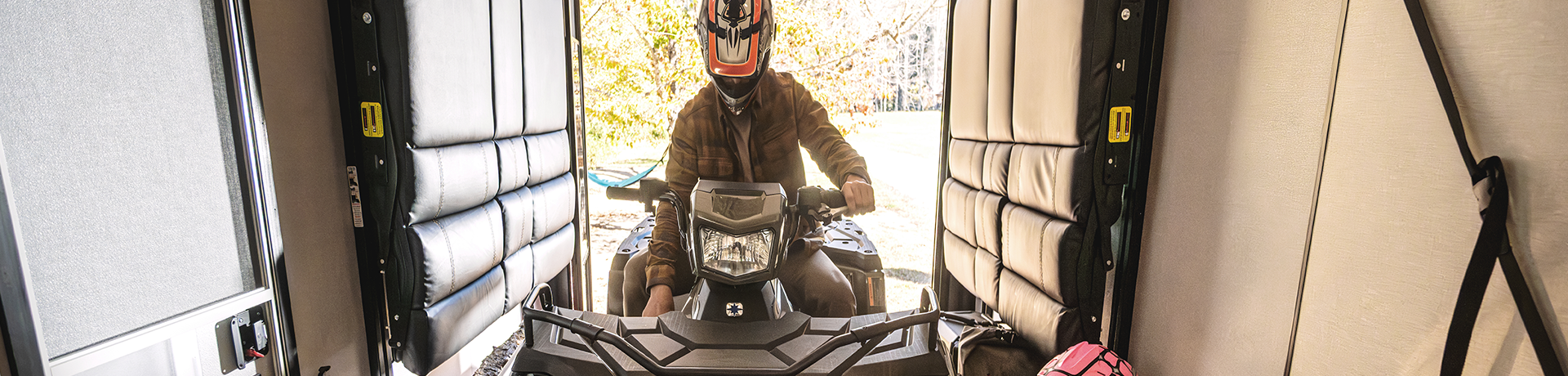
A toy hauler is a type of RV with a built-in garage at the rear, accessed by a fold-down ramp door, that lets you bring motorcycles, ATVs, side-by-sides, kayaks, or bikes along on your trip. When the toys come out, that same garage converts into living space — extra sleeping, a patio, or a workout area. It’s the one RV designed to carry your gear and house you at the same time.
That dual purpose is what sets a toy hauler apart from every other camper. A standard travel trailer or fifth wheel gives you a place to sleep and cook. A toy hauler gives you that plus a reinforced cargo space built to haul heavy, motorized equipment. If your idea of camping involves a destination and the toys you ride once you get there, this is the RV built around that lifestyle.
Below, we answer the questions buyers ask most before choosing one — what they are, how they work, what they weigh, and how to pick the right configuration.
What Does a Toy Hauler Do?
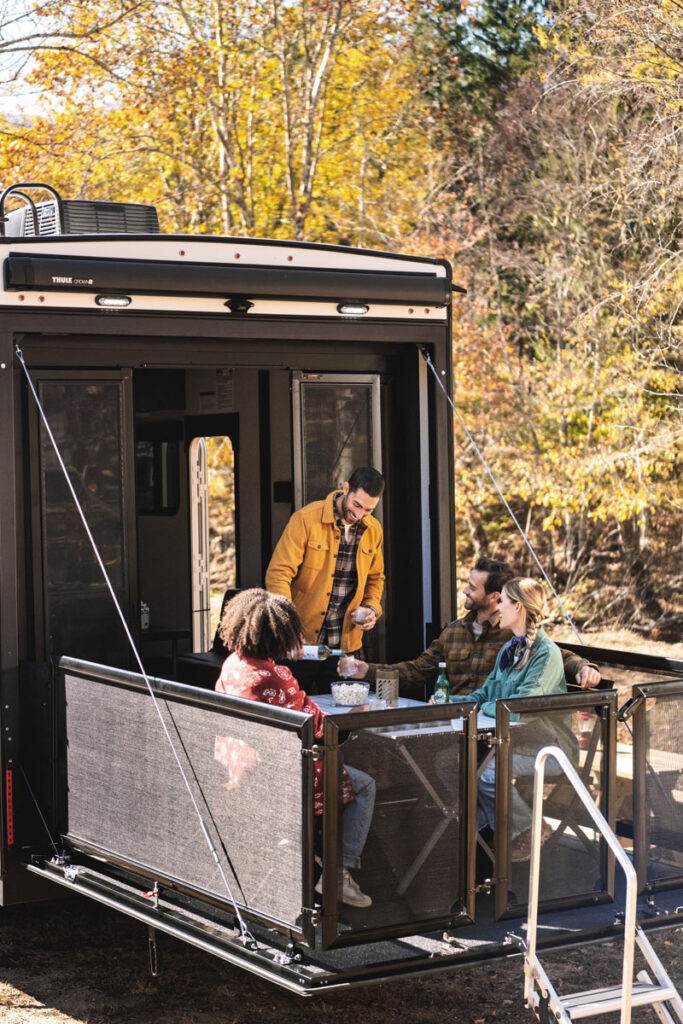
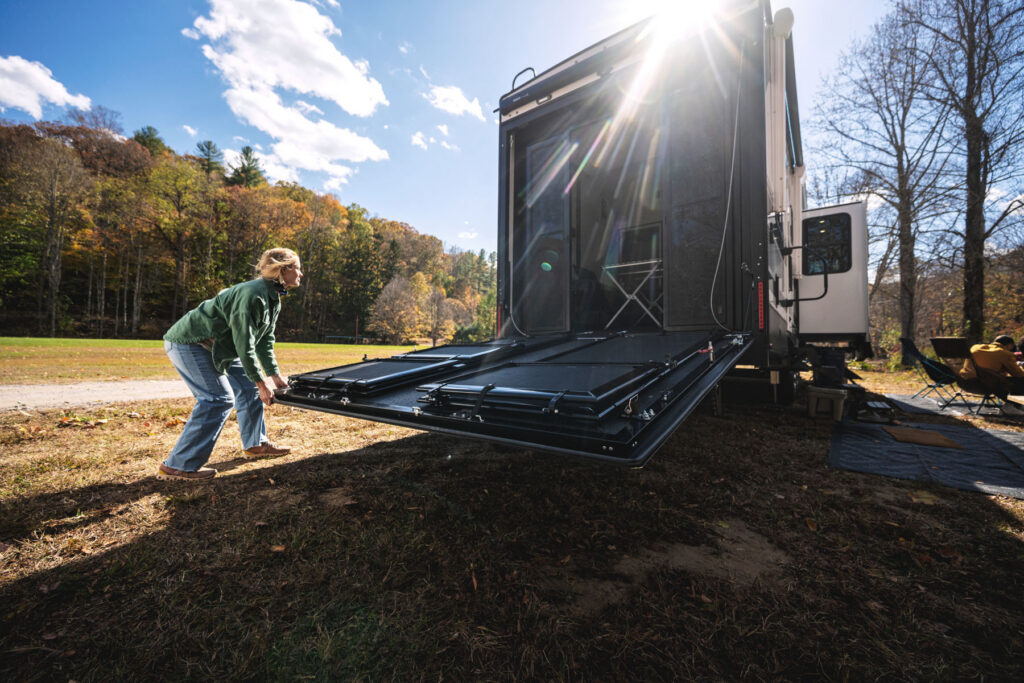
A toy hauler hauls recreational vehicles and gear inside a dedicated garage while also functioning as a full living space with a kitchen, bathroom, and sleeping areas. The rear garage has a heavy-duty ramp door that folds down to load and unload, then seals shut for travel or folds into a patio at camp.
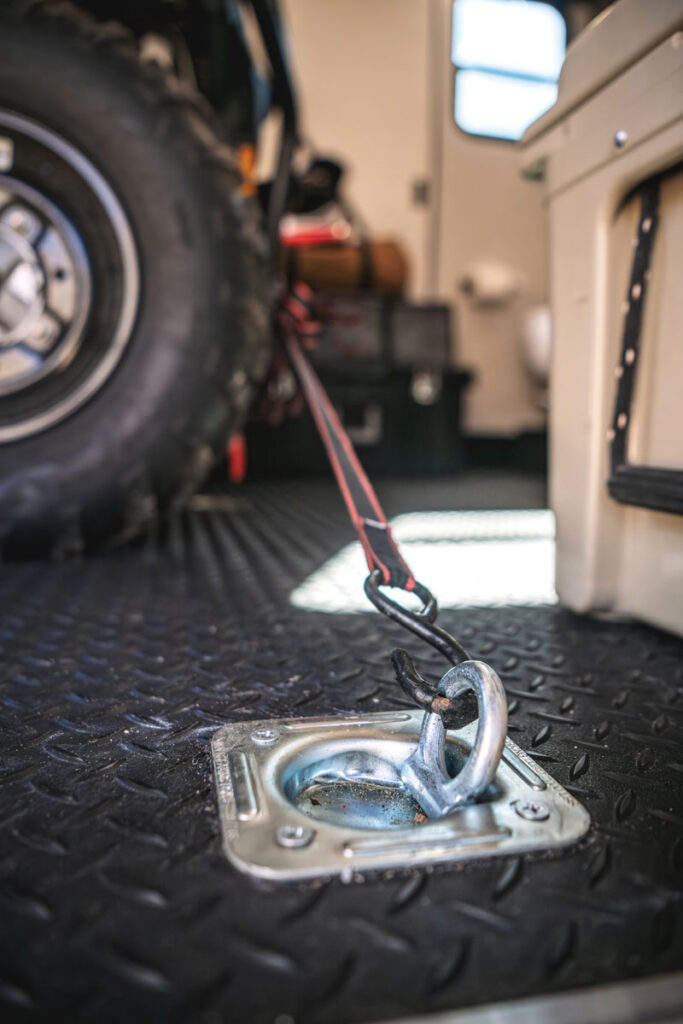
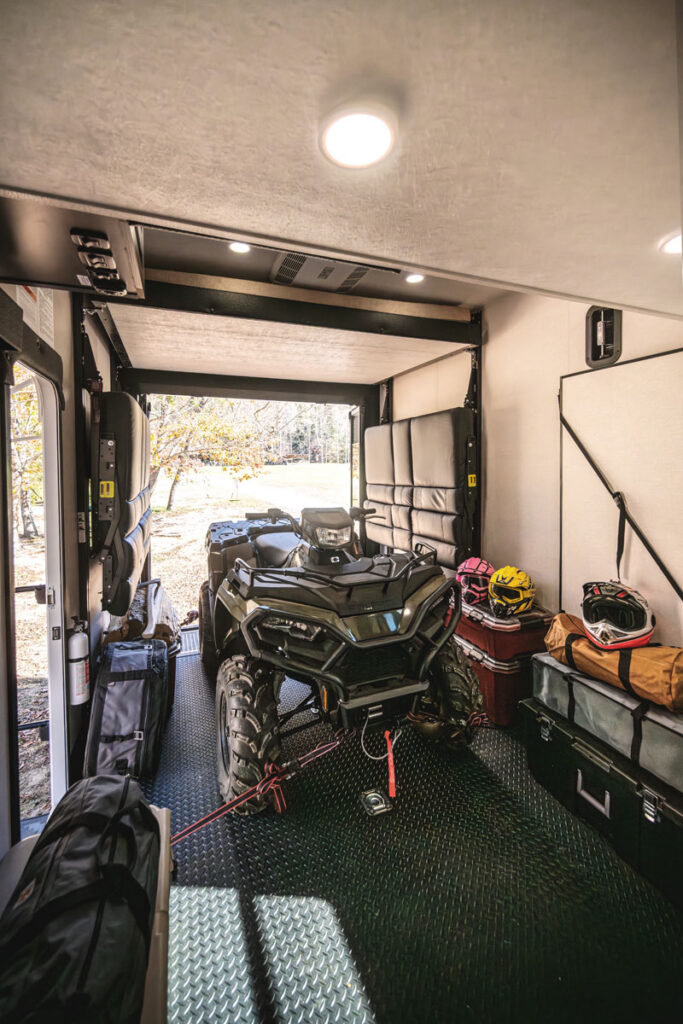
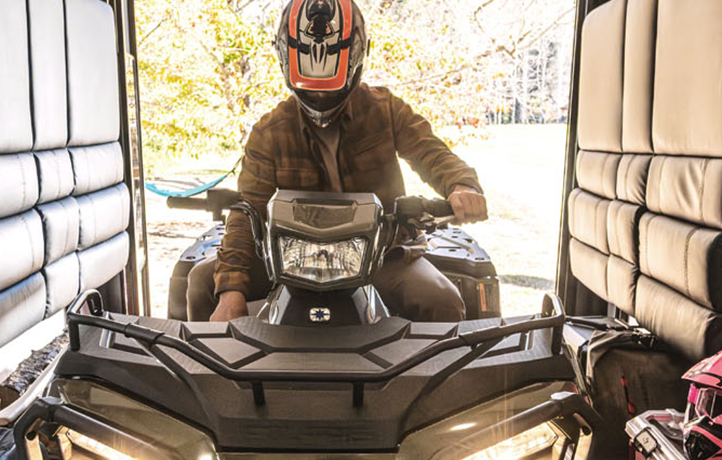
In practice, the garage is the defining feature. Tie-down points (often steel D-rings) anchor your toys to the frame so they don’t shift in transit. Many garages have a fuel station to refill tanks, washable or rubberized flooring to handle mud and spills, and removable or fold-away furniture so the space flips between “cargo bay” and “bonus room” in minutes. Some Heartland toy hauler floorplans even include an electric bed that lifts to the ceiling, clearing the floor for a UTV and dropping down for sleeping once you’ve parked.
How Does a Toy Hauler Work?
A toy hauler works by combining a livable RV interior with a rear garage that opens via a fold-down ramp. You drive your toys up the ramp into the garage, secure them to anchor points, raise the ramp into a sealed wall for travel, and then unload at your destination and reconfigure the garage as living or patio space.
The ramp door is the heart of the system. It typically doubles as a patio deck once lowered at camp, with optional railing kits and a patio enclosure. Inside, the garage often shares climate control and electricity with the main cabin, and an onboard generator (the Cyclone line, for example, offers a powered generator with a pure sine inverter) keeps everything running off-grid so you can charge tools, run lights, and refuel without hookups.
Toy Hauler vs. Travel Trailer vs. Fifth Wheel: What’s the Difference?
The key difference is the garage. A travel trailer and a fifth wheel are living space only — kitchen, bathroom, sleeping areas. A toy hauler keeps all of that and adds a reinforced rear garage with a fold-down ramp door, so you can haul motorized toys, bikes, and gear that a standard RV has no place to carry.
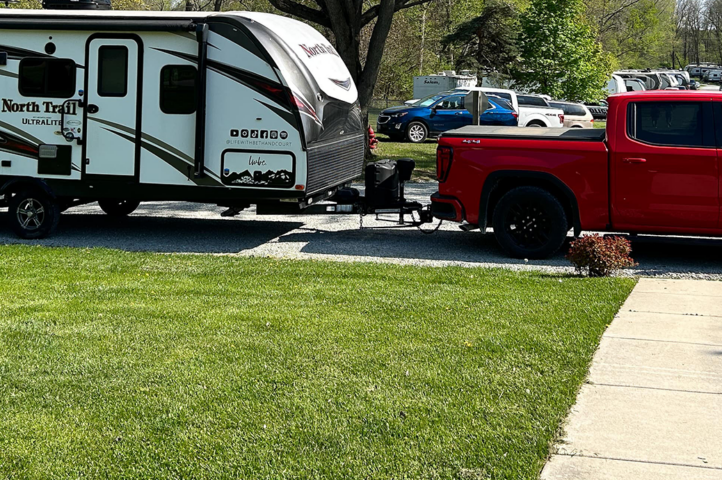
The catch that confuses most buyers: “travel trailer” and “fifth wheel” describe how the RV tows, while “toy hauler” describes what it’s built to do. They’re not three parallel choices. A toy hauler is itself either a travel trailer or a fifth wheel — it just has the added garage. So the real comparison looks like this:
| Standard Travel Trailer | Standard Fifth Wheel | Toy Hauler | |
| Has a garage? | No | No | Yes — with ramp door |
| How it tows | Ball hitch | In-bed fifth wheel hitch | Either, depending on model |
| Hauls motorized toys? | No | No | Yes |
| Convertible bonus space? | No | No | Yes — garage flips to living/patio |
| Best for | Lightweight, simple camping | More space, full-time living | Bringing toys and gear along |
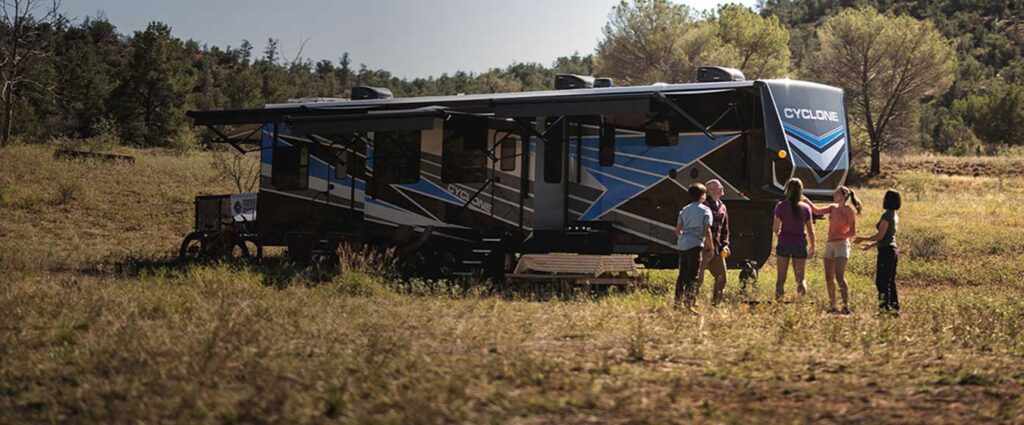
So the honest answer to “toy hauler vs. travel trailer vs. fifth wheel” is that you’re not choosing between three separate things. You’re deciding whether you want a garage — and if you do, you then pick whether you want it as a travel trailer toy hauler (lighter, towable by more vehicles) or a fifth wheel toy hauler (bigger garage, more living space). Heartland builds the Cyclone in both: a fifth wheel toy hauler and a lighter travel trailer toy hauler.
How Much Does a Toy Hauler Weigh?
Toy hauler weights vary widely by size and type. Lighter travel trailer toy haulers can start in the range of a conventional travel trailer, while large triple-axle fifth wheel toy haulers are among the heaviest towable RVs on the market.
Two numbers matter most when you shop:
- Dry weight (UVW): what the RV weighs empty, before fuel, water, or cargo.
- Cargo carrying capacity (CCC): how much weight you can add — including your toys, gear, water, and supplies.
Because a toy hauler is built to carry heavy motorized equipment, its cargo capacity is engineered higher than a comparable non-garage RV. Always match the loaded weight — RV plus toys plus everything else — to your tow vehicle’s rated towing and payload capacity, not the empty weight. Garage lengths on the Cyclone fifth wheel range up to roughly 14 feet, which tells you how much toy you can realistically fit.
What Can You Haul in a Toy Hauler?
A toy hauler’s garage is sized to carry a wide range of recreational equipment:
- Motorcycles and dirt bikes
- ATVs and UTVs / side-by-sides
- Golf carts and e-bikes
- Kayaks, paddleboards, and bikes
- Smart cars or small vehicles (in the largest garages)
- Hobby and work gear — tools, hunting and fishing equipment, mobile-office setups
When the toys are out, that same square footage becomes whatever you need: a guest bedroom with fold-down bunks, a screened patio, a home gym, or a mobile workshop. That flexibility is the real reason buyers choose a toy hauler over a standard RV.
Who Should Buy a Toy Hauler?
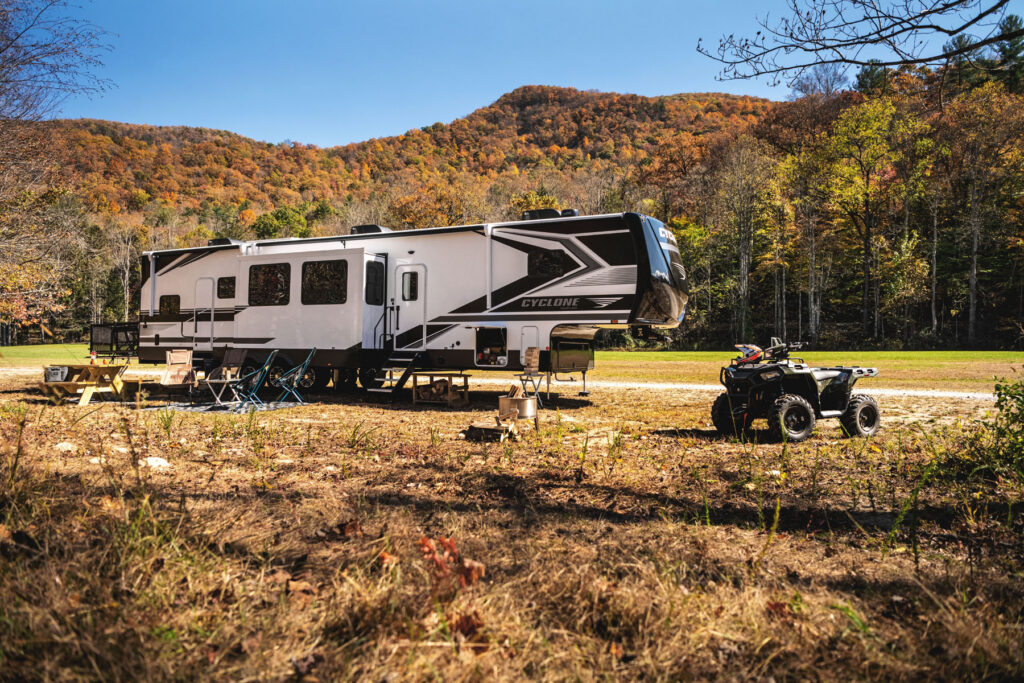
A toy hauler makes sense if you want to bring motorized recreation or bulky gear to your destination and value flexible interior space. It’s ideal for off-road riders, racers, outdoor adventurers, tailgaters, and full-time RVers who want a convertible bonus room — and increasingly for remote workers who use the garage as an office or studio.
If you never haul toys and want the lightest, simplest RV for the money, a standard travel trailer may suit you better. But if your trips are built around what you ride, paddle, or pedal once you arrive, a toy hauler is purpose-built for exactly that.
How to Choose the Right Toy Hauler
Start with three questions: What are you hauling, what are you towing it with, and how do you want to use the garage at camp?
- Measure your toys. Note length, width, height, and weight, then match them to garage dimensions and cargo capacity — with margin to spare.
- Know your tow vehicle. Your truck or SUV’s towing and payload ratings decide whether you’re shopping travel trailer or fifth wheel toy haulers.
- Pick your garage features. Fuel station, patio kit, electric bed, second bathroom, washable flooring — prioritize what your trips actually need.
- Think about living space. More slides and longer floorplans mean more room when the toys are out.
When you’re ready to compare real configurations, you can browse current floorplans and check live availability through Heartland’s toy hauler inventory search and request pricing on any model that fits.
Frequently Asked Questions About Toy Haulers
Is a toy hauler a travel trailer or a fifth wheel? It can be either. A toy hauler is a garage configuration available in both travel trailer form (towed with a standard hitch) and fifth wheel form (towed with an in-bed hitch on a pickup). Heartland’s Cyclone, for instance, comes in both.
Can you live in a toy hauler full-time? Yes. Many full-time RVers choose toy haulers because the convertible garage adds flexible living, office, or guest space on top of the standard kitchen, bathroom, and bedroom. Larger fifth wheel toy haulers offer residential-style amenities suited to long-term living.
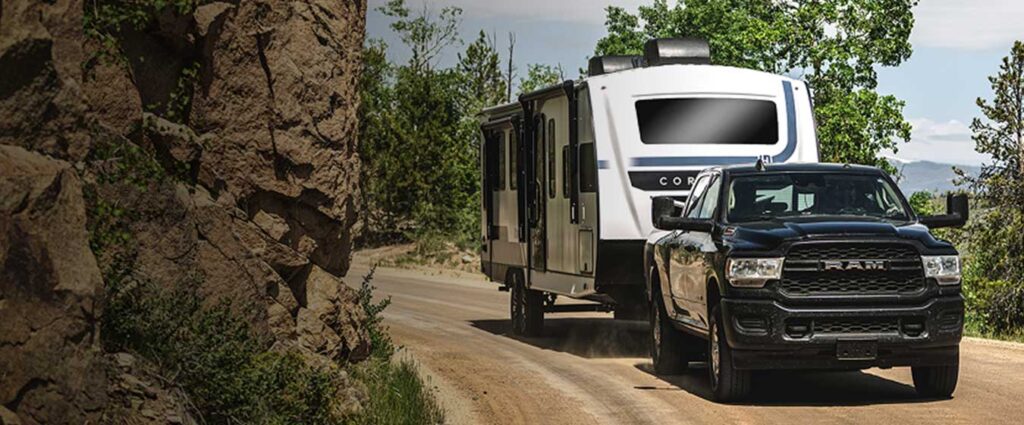
Do you need a special truck to tow a toy hauler? It depends on the type and weight. Lighter travel trailer toy haulers can be towed by capable SUVs and half-ton trucks, while large fifth wheel toy haulers require a heavy-duty pickup. Always match the RV’s loaded weight to your vehicle’s towing and payload ratings.
What’s the difference between a toy hauler and a regular camper? A regular camper is living space only. A toy hauler adds a rear garage with a fold-down ramp door, reinforced flooring, and tie-down points so you can haul motorized toys and gear — then convert that garage to living or patio space.
How big is the garage in a toy hauler? Garage lengths vary by model, ranging from compact spaces for a couple of dirt bikes up to roughly 18 feet in large fifth wheel toy haulers that can fit a side-by-side or small vehicle. [VERIFY — confirm against current Cyclone specs]
Are toy haulers good for families? Yes. The convertible garage often includes fold-down or electric beds, adding sleeping capacity, and doubles as a play or gear room for kids’ bikes and outdoor equipment.
Ready to Find Your Toy Hauler?
A toy hauler is the only RV that brings your toys, your gear, and your home along in one tow. If you’re ready to see what fits your lifestyle and your tow vehicle, explore our toy haulers or search current inventory and request a quote to get pricing and financing on the floorplan that’s right for you.