
What Is a Fifth Wheel Trailer? (And Is It Right for You?)
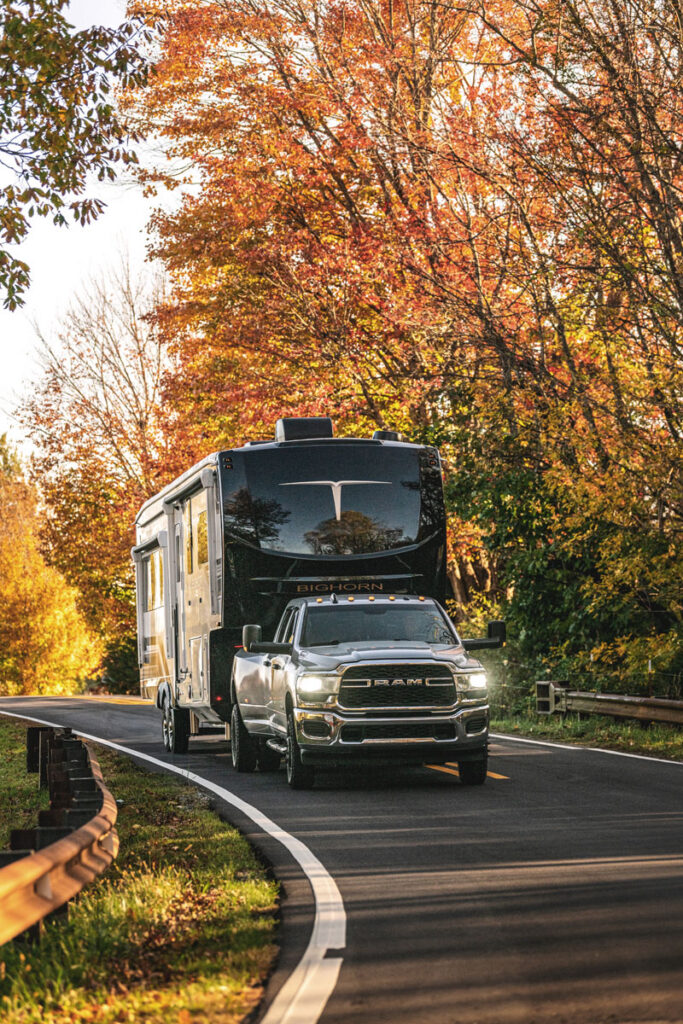
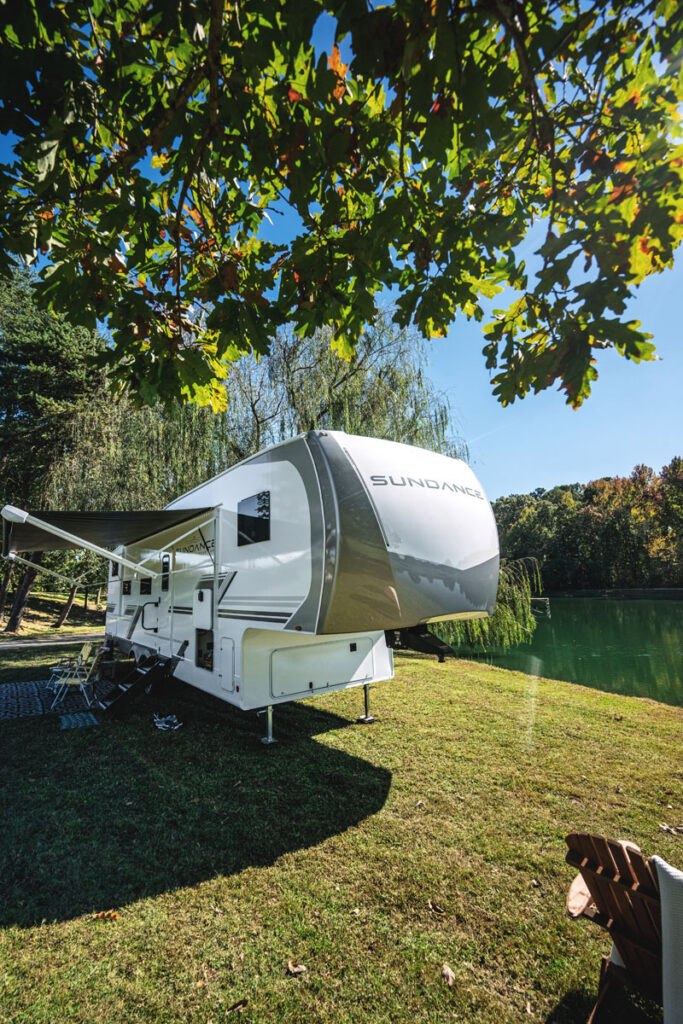
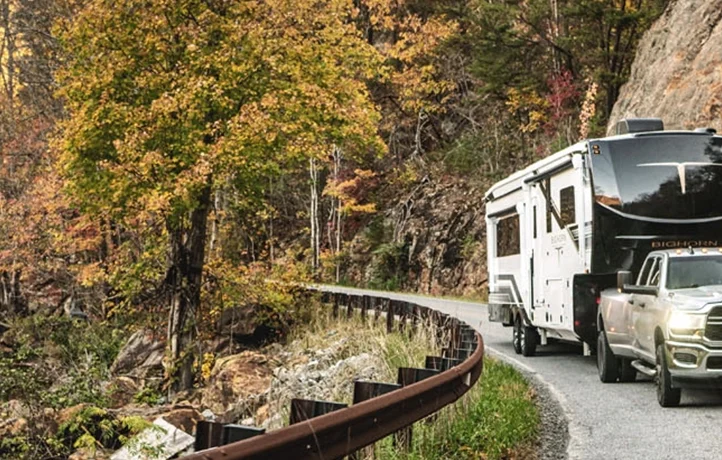
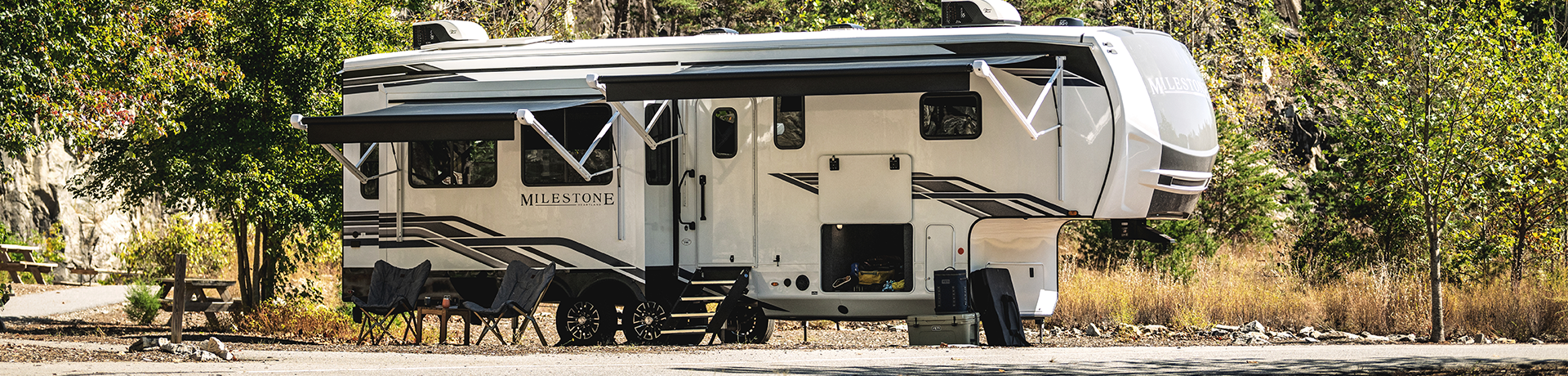
A fifth wheel is a large towable RV that hitches to a special coupling mounted in the bed of a pickup truck, rather than to a bumper hitch behind it. That in-bed connection sits over the truck’s rear axle, giving fifth wheels more towing stability, more interior space, and the tallest ceilings of any towable RV. They’re a favorite of full-time RVers and families who want a home-like setup on the road.
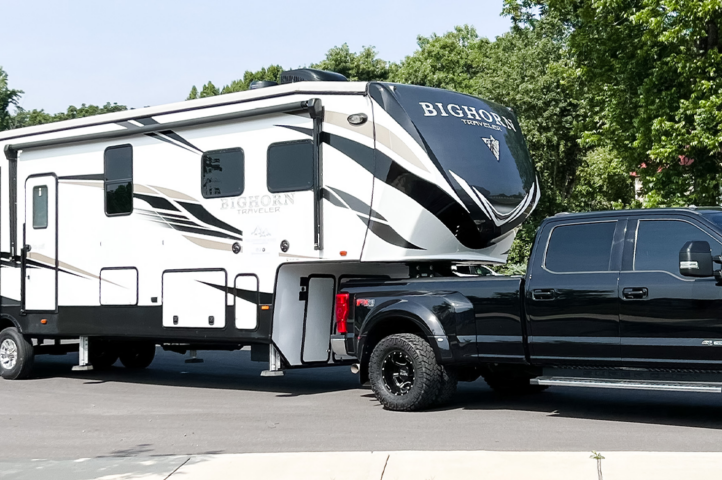
If you’ve ever seen an RV with a raised front section that extends over the bed of the truck pulling it, that’s a fifth wheel. That distinctive overhang isn’t just styling — it’s where the trailer connects to the truck and where you’ll usually find the master bedroom. Understanding how that design works is the key to deciding whether a fifth wheel is the right RV for you.
This guide covers what a fifth wheel is, how the hitch works, what it takes to tow one, the real pros and cons, and how it compares to a travel trailer — so you can decide with confidence.
What Does “Fifth Wheel” Mean?
The term “fifth wheel” refers to the U-shaped coupling device mounted in the truck bed that the trailer’s kingpin locks into. The name dates back to a horizontal wheel-shaped plate used on horse-drawn carriages and later trucks to help them turn and bear weight — it acted as a “fifth wheel” beyond the four on the ground.
In RV terms, the name stuck because the hitch uses that same over-axle, plate-style coupling. So while a fifth wheel RV doesn’t literally have five wheels, the hitch design it’s named after is what defines it. That hitch placement — over the truck’s rear axle instead of behind the bumper — is the single feature that separates a fifth wheel from a conventional travel trailer.
How Does a Fifth Wheel Hitch Work?
A fifth wheel hitch works by mounting a coupling plate in the bed of a pickup truck, directly over or just ahead of the rear axle. The trailer has a downward-pointing kingpin on its front overhang that drops into the hitch jaws and locks in place, distributing the trailer’s weight onto the truck’s frame rather than its rear bumper.
This over-axle design is why fifth wheels tow so stably. Because the pivot point sits inside the truck rather than trailing behind it, fifth wheels are far less prone to the side-to-side sway that can affect bumper-pull trailers. The setup also gives a tighter turning radius for the trailer’s length.
What Truck Do You Need to Tow a Fifth Wheel?
You need a pickup truck with a bed to tow a fifth wheel, because the hitch mounts inside the bed. Most fifth wheels require at least a three-quarter-ton (250/2500-class) truck, and the largest luxury models need a one-ton (350/3500-class) truck to safely handle their weight.
Three numbers determine whether your truck is up to the job:
- Payload capacity — the hitch puts significant downward “pin weight” on the truck bed, often 15–25% of the trailer’s loaded weight.
- Towing capacity — must exceed the trailer’s fully loaded weight, not its empty weight.
- Bed length — a standard or long bed clears the trailer’s overhang in turns; short beds may need a sliding or extended hitch.
Heartland’s redesigned Bighorn fifth wheels run roughly 36 to 44 feet long and start at around 13,135 pounds dry, which puts them firmly in three-quarter to one-ton truck territory once loaded. Always match your loaded trailer weight to your truck’s ratings before you buy.
Fifth Wheel vs. Travel Trailer: What’s the Difference?
The core difference is the hitch and where it mounts. A fifth wheel connects to an in-bed hitch over the truck’s rear axle, while a travel trailer connects to a ball hitch behind the bumper. That one difference cascades into nearly every other distinction:
| Feature | Fifth Wheel | Travel Trailer |
| Hitch location | In the truck bed, over the axle | Behind the bumper |
| Tow vehicle | Pickup truck only | SUV, van, or truck |
| Towing stability | Very stable, minimal sway | More prone to sway |
| Interior space | More; multi-level with tall ceilings | Less; single-level |
| Maneuvering | Tighter turns, but needs practice | Easier for beginners |
| Price range | Generally higher | Generally lower |
If you tow with an SUV or want the simplest, most affordable entry into RVing, a travel trailer wins. If you have a capable pickup and want maximum living space and stability — especially for full-time or long-haul use — a fifth wheel is the stronger choice. (If you also want to bring motorized toys, there’s a third option that overlaps both: see our guide to what a toy hauler is, which comes in both fifth wheel and travel trailer form.)
Pros and Cons of a Fifth Wheel
Advantages:
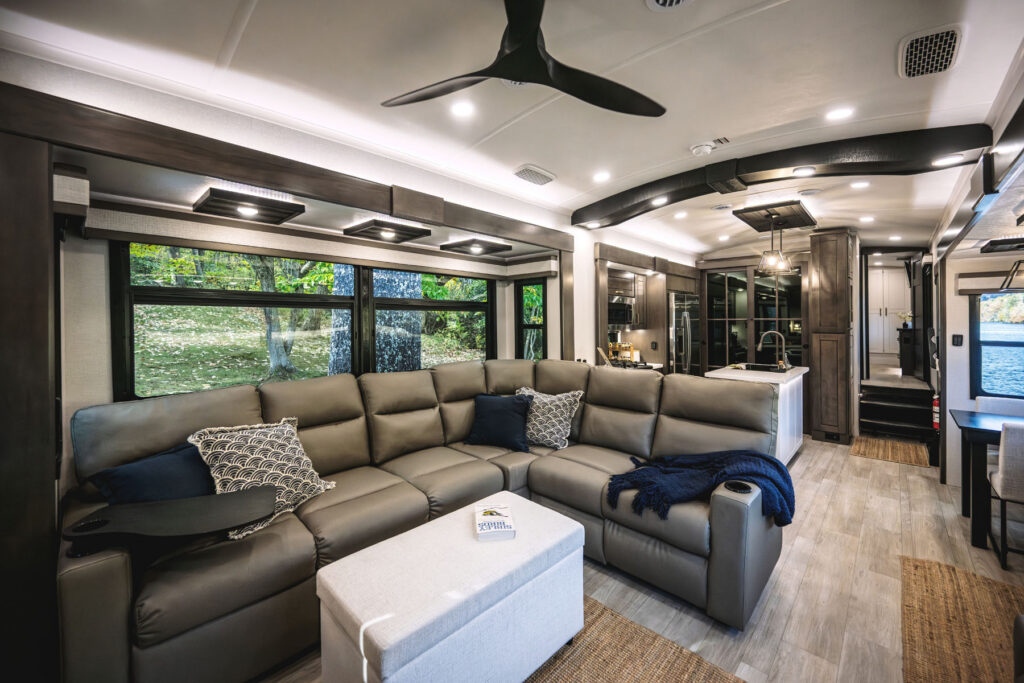
- More living space. The raised front section creates a true multi-level floorplan, often with a private bedroom up front and tall, residential-height ceilings.
- Towing stability. The over-axle hitch dramatically reduces sway, making long highway tows more comfortable.
- Residential amenities. Luxury fifth wheels offer features like solid-surface countertops, full kitchens, fireplaces, and walk-in showers — Heartland’s Bighorn, its flagship line, is built specifically for full-time, home-like living.
- Larger storage and pass-through compartments hold far more gear than most travel trailers.
Disadvantages:
- Requires a pickup truck. You can’t tow one with an SUV, so factor in the cost of a capable truck if you don’t already own one.
- Higher price. More size and amenities generally mean a higher purchase price than a comparable travel trailer.
- Size and height. Their length and tall profile take practice to maneuver and limit access to some smaller campsites and low-clearance routes.
- Reduced truck bed use. The in-bed hitch occupies your cargo bed while towing.
Is a Fifth Wheel Right for You?
A fifth wheel is right for you if you already own (or are willing to buy) a capable pickup truck, you want maximum living space and stability, and you plan to camp often, travel long distances, or live in your RV full-time. It’s the go-to choice for buyers who prioritize comfort and space over the lowest possible entry cost.
A fifth wheel may not be right for you if you tow with an SUV, take mostly short weekend trips, or want the simplest, most budget-friendly RV. In those cases, a travel trailer usually makes more sense. The best way to decide is to walk through real floorplans and match them to how you’ll actually camp. You can browse Heartland’s fifth wheel lineup or search current inventory and request a quote to compare layouts, weights, and pricing.
Frequently Asked Questions About Fifth Wheels
Why is it called a fifth wheel?
The name comes from the U-shaped coupling the trailer hitches to, which descends from a wheel-shaped plate used on early carriages and trucks to help them pivot and bear weight. The RV uses that same over-axle, plate-style hitch, so the name carried over — even though the RV doesn’t have five literal wheels.
Is a fifth wheel considered an RV?
Yes. A fifth wheel is a type of towable recreational vehicle, alongside travel trailers and toy haulers. It’s not motorized — it’s pulled by a separate pickup truck — but it’s fully an RV, with living, cooking, and sleeping space.
Can you tow a fifth wheel with a half-ton truck?
Some smaller, lighter fifth wheels can be towed by a capable half-ton truck, but many mid-size and most luxury fifth wheels require a three-quarter-ton or one-ton truck. Always compare the trailer’s loaded weight and pin weight to your truck’s towing and payload ratings.
How much does a fifth wheel weigh?
Fifth wheel weights vary widely by size. Larger luxury models like Heartland’s Bighorn weigh around 15,000 pounds dry, before adding water, gear, and supplies. [VERIFY — confirm current weight range] Loaded weight is always higher, so size your truck accordingly.
Are fifth wheels good for full-time RVing?
Yes. Fifth wheels are one of the most popular choices for full-time RVers because of their spacious multi-level floorplans, residential amenities, and ample storage. Flagship lines like Heartland’s Landmark are designed specifically for full-time, home-like comfort.
Ready to Explore Fifth Wheels?
A fifth wheel offers the space, stability, and residential comfort that make it the top choice for serious and full-time RVers — as long as you’ve got the truck to tow one. If that sounds like your kind of adventure, explore Heartland’s fifth wheel lineup or search current inventory and request a quote to find the floorplan and pricing that fit your life on the road.