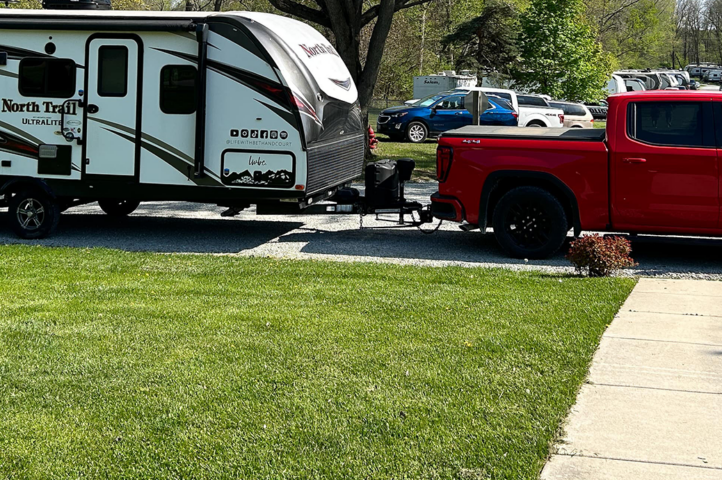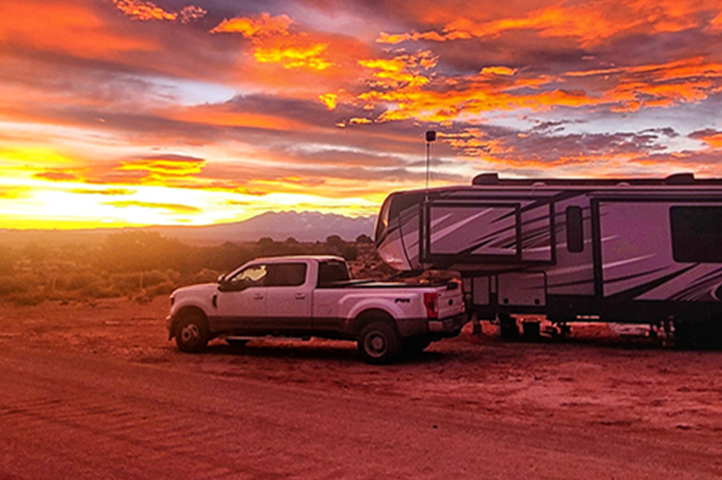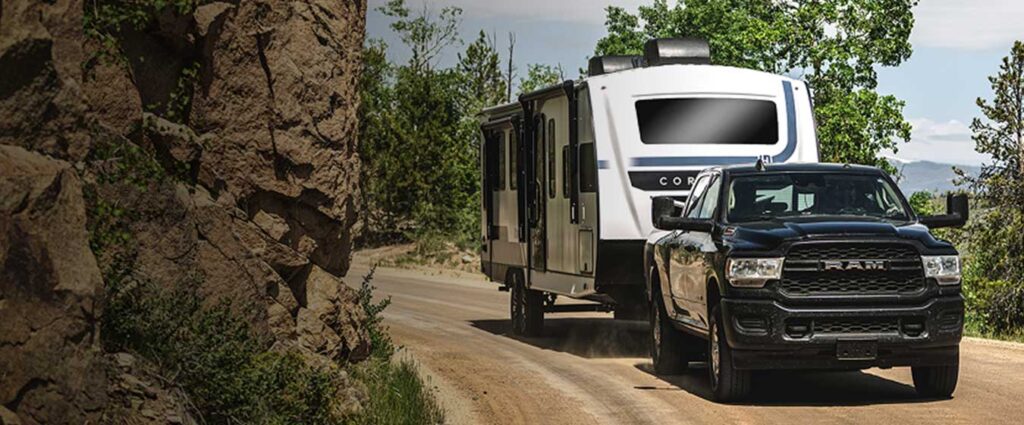
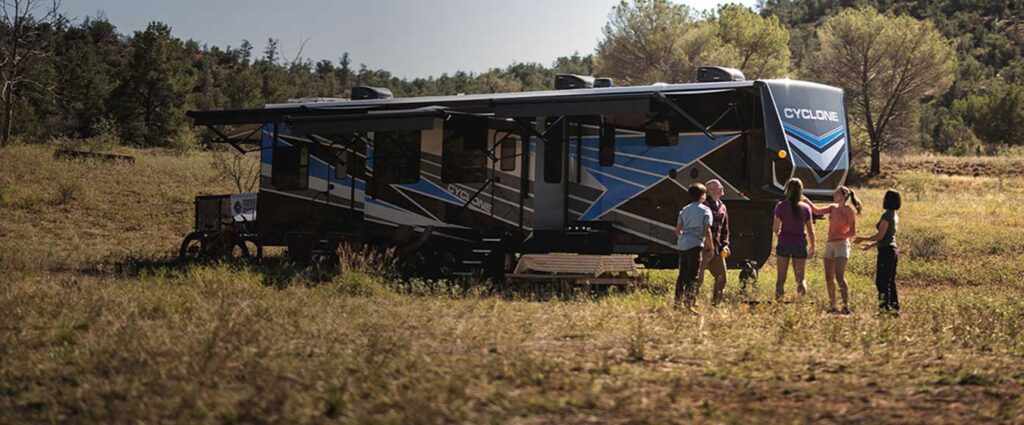
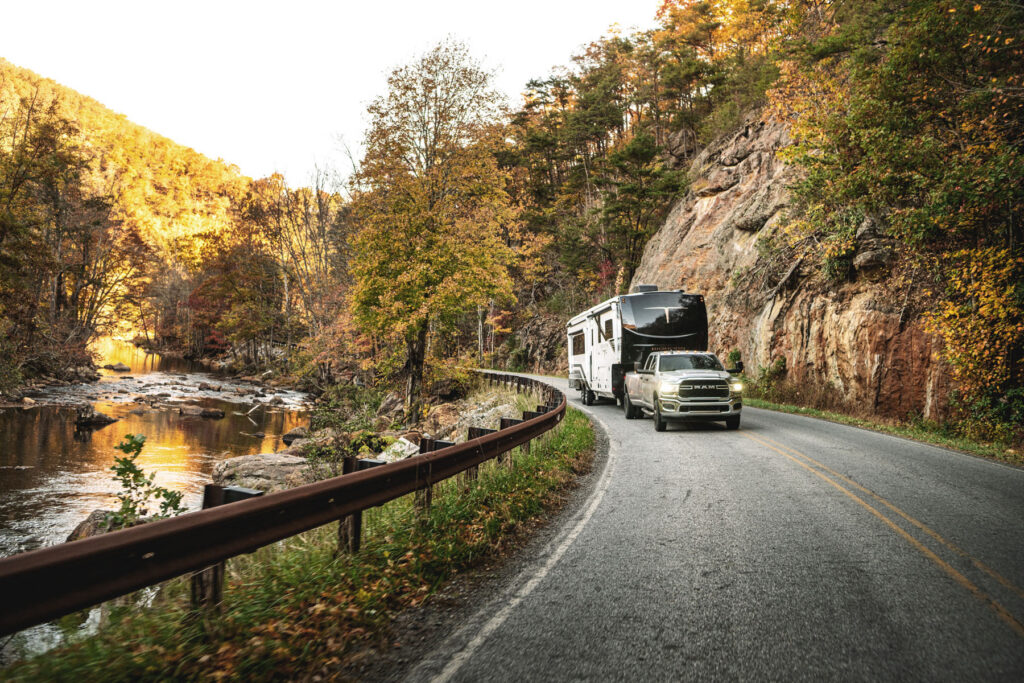


There is something exciting about pulling out of the driveway with a full tank of fuel, a well stocked refrigerator, and hundreds, or even thousands, of miles of adventure ahead. A cross-country RV trip offers the freedom to travel at your own pace, and make memories that simply cannot be found on a flight itinerary.
But successful RV travel begins long before you turn the key. A little preparation can help you avoid stress, save money, and enjoy the journey more. After years of RV travel, one thing has become clear: the better you plan and pack, the more you can focus on the adventure itself, take it from a 20+ year RVer.
Start with a Plan, Leave Room for Adventure
One of the biggest advantages of RV travel is the flexibility you have. While it is smart to map out your route and reserve campgrounds in popular destinations, it is equally important to leave room for unexpected discoveries.
Before heading out, identify your major destinations and estimate how many driving days you’ll need. Most experienced RVers prefer to keep travel days manageable, Mat,t and I prefer 4-6 hours max on a travel day. Shorter driving days allow more time to explore local attractions, enjoy scenic routes, and actually experience the places you are visiting.
It is also wise to download RV-friendly navigation apps that can help you avoid low bridges, steep grades, and roads that may not be suitable for larger rigs.
Give Your RV a Thorough Inspection
Nothing can ruin a road trip faster than a preventable mechanical issue. Before embarking on a cross-country adventure, take time to inspect your RV from top to bottom.
Check tire pressure and tread, inspect your batteries, test all exterior lights, and verify that your brakes are functioning properly. Make sure your propane tanks are filled and that your water system is operating correctly. If you tow a fifth wheel or travel trailer, inspect your hitch and safety equipment carefully.
Heartland RV Pro-tip: A pre-trip inspection may take an hour or two, but it can save days of frustration on the road.
Organize Important Documents
When traveling through multiple states, having your paperwork organized becomes even more important.
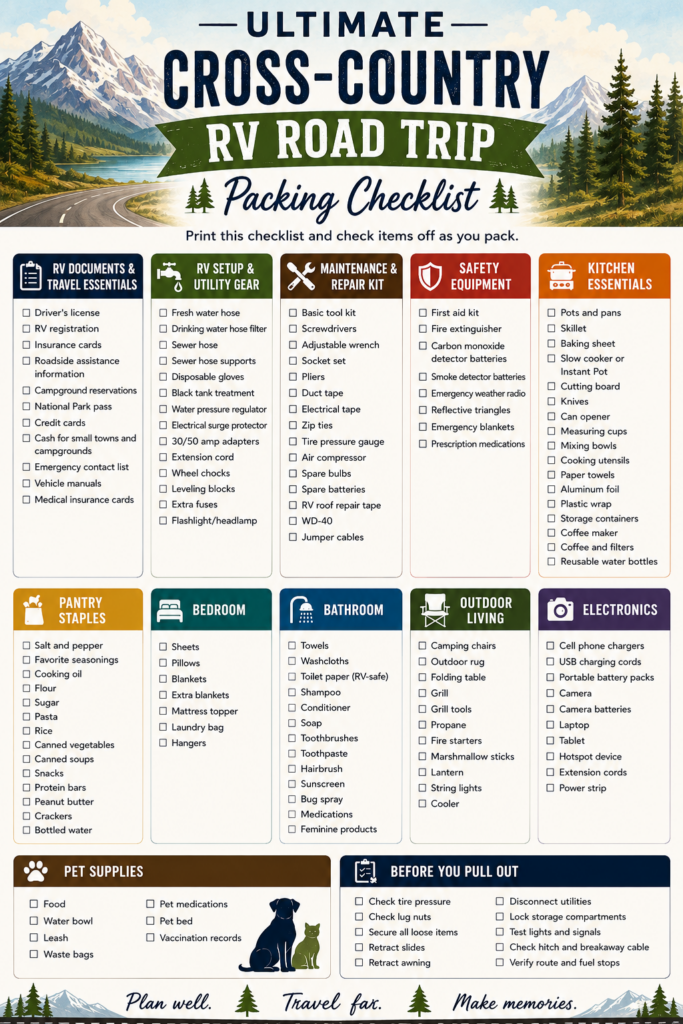
Keep your driver’s license, registration, insurance information, roadside assistance membership, campground reservations, and emergency contact information in one easy-to-access location. Many RV travelers keep digital copies stored on their phones as an added backup.
If an unexpected situation arises, having everything readily available can make a high-stress moment manageable.
Pack Smart for the Kitchen
One of the greatest perks of RV travel is having your own kitchen wherever you go. Preparing meals at the campsite can save money, give you more flexibility during your travels, and let you enjoy the RV park you are at.
Stock your RV with basic cookware, utensils, storage containers, dish soap, paper towels, and a few favorite seasonings. It is also helpful to prepare a few easy meals ahead of time for travel days, when you arrive at camp tired and hungry.
Don’t forget coffee or tea. Experienced RVers know that a morning warm-up overlooking a lake, mountain range, or desert landscape is one of the simple pleasures that make RV travel so rewarding.
Stock Your Pantry Before You Leave
A well-stocked pantry makes travel days much easier. Consider bringing non-perishable staples such as pasta, rice, canned goods, snacks, coffee, peanut butter, and bottled water.
Having food readily available means fewer emergency grocery stops and more flexibility when exploring areas with limited shopping options, plus you don’t have to worry about parking when the RV is connected to your tow vehicle.
It also makes those spontaneous overnight stops much easier when dinner is already in the RV.
Prepare for Different Weather Conditions
A cross-country trip often means experiencing multiple climates during a single vacation. You might leave home in cool spring temperatures and find yourself in desert heat just a few days later.
Packing layers is one of the easiest ways to stay comfortable. Lightweight shirts, sweatshirts, rain gear, comfortable walking shoes, and a jacket can handle most situations. Even during summer travel, cooler evenings and changing elevations can bring unexpected temperature swings.
Heartland RV pro-tip: A little extra preparation can keep you comfortable no matter where the road leads.
Don’t Forget Safety and Emergency Supplies
Every RV should carry a few items that hopefully never get used but are invaluable when needed.
A well-stocked first aid kit, flashlight, extra batteries, basic tool kit, tire pressure gauge, portable air compressor, work gloves, and roadside safety triangles should always be on board. These items take up very little space and can make a major difference during an emergency.
Many seasoned RV travelers also carry spare fuses, extra water hoses, and a backup sewer hose just in case.
Heartland RV pro tip: Keep these in your RV garage, in a spot you can easily access as needed. (hopefully never.)
Stay Connected on the Road
Technology has made RV travel easier than ever. Navigation, campground reservations, weather alerts, and trip planning are often handled from a smartphone.
Before your trip, make sure you have charging cables, portable battery packs, and any necessary adapters. If you work remotely or rely heavily on internet access, a mobile hotspot can be a worthwhile investment.
Downloading maps before entering remote areas is also a smart move, as cell service can become spotty in national parks and rural regions.
Create a Comfortable Campsite
Your RV may be your home on wheels, but the campsite often becomes your favorite living space.
Camp chairs, an outdoor rug, lanterns, bug spray, sunscreen, and a portable grill can transform an ordinary campsite into an outdoor retreat. After a long day of driving or sightseeing, there is nothing quite like sitting outside and enjoying the evening.
Heartland RV pro-tip: These simple comforts often become some of the most-used items on the entire trip.
The best cross-country RV trips are not always defined by the destinations. Often, the most memorable moments happen along the way, a small-town diner, an unexpected roadside attraction, a beautiful sunset at a campground you found by chance, or a conversation with fellow travelers around a campfire.
Planning and packing thoughtfully help eliminate many common travel frustrations, allowing you to focus on the experiences that make RV travel so special.
Create your checklist or use ours, prepare your RV, and hit the road with confidence. The adventure is waiting, and some of your favorite memories may be just around the next bend.
Written by travel author Brandy Gleason from the Gleason Family Adventure.