

Article provided by brand ambassador and travel writer Brandy Gleason from Gleason Family Adventures.
A Step-by-Step Guide to Buying an RV and How to Be Prepared
Buying a new rig is exciting. It’s the start of new road trips and new campgrounds, trust us, it is a whole new chapter of adventure. But whether you’re upgrading your current RV or buying your very first camper, knowing what to expect when buying a new rig makes the process smoother, less stressful, and even enjoyable.
If you’ve been dreaming about pulling into your favorite campground with that “new rig smell,” here’s exactly what will happen, step by step, and how to prepare for each stage.
Step 1: Define Your RV Lifestyle Before You Shop
Before you set foot on a dealership lot, take a moment to think about how you actually plan to use your RV.
Are you: Weekend campers? Snowbirds? Full-time RVers? Traveling with kids or grandkids? Bringing pets? Working remotely on the road?
Your lifestyle determines the type of RV you need: a travel trailer, a fifth wheel, a motorhome, a toy hauler, or a camper van.
Pro Tip: Don’t buy based on looks alone. Floor plan matters more than décor, because you can change the design but not the floor plan. Imagine rainy days inside. Can everyone move comfortably? Is there enough storage? Where will you put your shoes, coats, and groceries?
Step 2: Set a Realistic Budget (Beyond the Sticker Price)
The purchase price is only part of the equation when buying a new RV. As you build your budget, remember to include sales tax and registration, insurance, and possibly an extended warranty if you want extra peace of mind. Weigh the pros and cons of this. You may also need hitch or towing upgrades, along with all the essential gear like sewer and water hoses, a surge protector, and leveling blocks. Inside the rig, you’ll want bedding and basic kitchen supplies to make it feel like home. Don’t forget RV roadside assistance for unexpected issues on the road, and storage costs if you don’t have space to keep your rig at home.
Pro Tip: Ask the dealership for a written “out-the-door” price. This helps you avoid surprises and gives you a clear picture of the total investment.
Step 3: Check Your Tow Vehicle
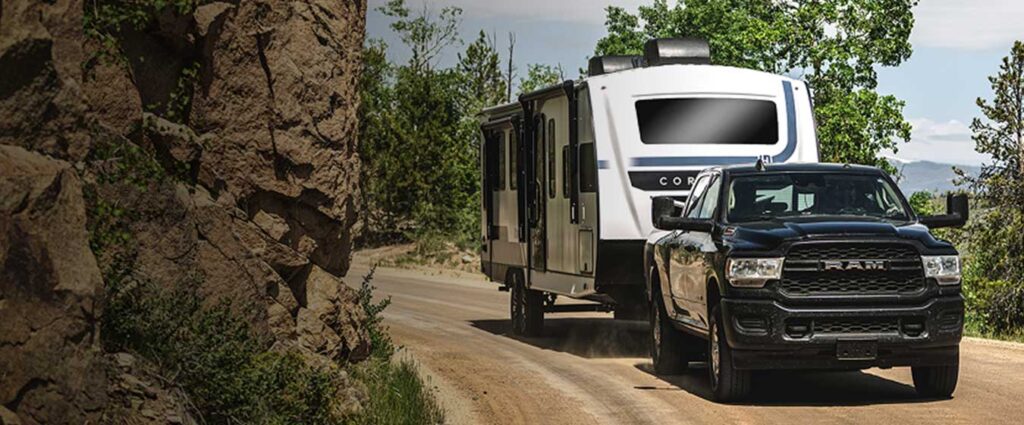
If you’re buying a travel trailer or fifth wheel, your truck’s towing capacity is critical.
Before towing a new RV, it’s essential to understand a few key weight and capacity numbers on your truck. GVWR, or Gross Vehicle Weight Rating, is the maximum amount your vehicle can safely weigh when fully loaded, including passengers, fuel, cargo, and hitch weight. GCWR, or Gross Combined Weight Rating, is the total allowable weight of your truck and the trailer combined. Payload capacity tells you how much weight your truck can carry in and on it, including passengers, gear, and the trailer’s tongue or pin weight. Finally, your hitch rating refers to the maximum weight your hitch system is designed to handle safely. These numbers work together, and exceeding any one of them can lead to unsafe driving conditions, excessive wear, or even mechanical failure. Taking the time to match your truck’s capabilities with your RV’s true loaded weight—not just the “dry weight” listed in brochures, helps ensure a safer, more confident towing experience from day one.
Pro Tip: Don’t rely on dry weight numbers. Always calculate using the trailer’s GVWR, not just the empty weight. Once you add water, gear, and personal items, the weight increases quickly.
Step 4: Visit Dealerships and Walk Through Multiple Rigs
Now comes the fun part, touring units. When you step inside a new rig, don’t just glance around—really experience it. Open every cabinet to see how much storage you truly have. Sit on the couch and imagine a rainy day inside. Stand in the shower to make sure there’s enough headroom. Lay on the bed and picture a full night’s sleep. Check all exterior storage compartments and consider where your gear will go. Test the seating positions to see if you can comfortably watch TV.
Most importantly, take your time. Excitement is part of the process, but don’t let it rush your decision. This is a big investment, and you want to be sure it feels like home before you drive it off the lot.
Pro Tip: Go to an RV show to see it ALL! Hershey, PA, and Tampa, FL, are great shows to see what rigs are out there.
Step 5: Financing and Paperwork
If you’re financing your RV, be prepared for a few standard steps. The dealership will typically pull your credit to determine eligibility and interest rates. From there, they’ll present available financing options and walk you through the loan terms, including the length of the loan, interest rate, and estimated monthly payment. RV loans often range from 10 to 20 years, depending on the price of the rig and your financial profile. Take time to review everything carefully, ask questions, and make sure the payment comfortably fits your budget before signing on the dotted line.
Pro Tip: Compare dealership financing with your local bank or credit union. Even a small difference in interest rate can save thousands over the life of the loan.
Step 6: The Pre-Delivery Inspection (PDI)
This is one of the most important steps when buying a new RV. Before you sign the final paperwork or take delivery, the dealership should complete a thorough walk-through of the entire rig and demonstrate how everything works. This process, called a Pre-Delivery Inspection (PDI), includes reviewing the water system, electrical system, slides, awnings, appliances, heating and cooling, leveling system, and propane operation. Don’t rush through it. Take notes, record videos if allowed, and ask questions until you feel completely comfortable. The PDI is your opportunity to ensure everything is functioning properly and that you understand how to operate your new RV with confidence.
Pro Tip: Bring a checklist. Test everything yourself. Run the water. Turn on the AC. Extend the awning. If something doesn’t work, have it fixed before you leave the lot.
Step 7: Expect a Learning Curve
Even seasoned RVers experience a learning curve when bringing home a new rig. Every brand and model operates a little differently, and it takes time to get comfortable with the specifics. Expect to spend some time watching tutorial videos, reading through the owner’s manual, and practicing the basics. You’ll want to rehearse hitching and unhitching until it feels second nature, learn proper tank management for fresh, gray, and black water, and give yourself time to adjust to backing up and maneuvering in tight spaces. The more you practice, the more confident and relaxed you’ll feel on the road.
Pro Tip: Plan your first trip close to home. A local campground gives you a stress-free environment to test everything before heading out on a long road trip.
Step 8: Outfitting Your New RV
Once the rig is officially yours, it’s time to make it both functional and comfortable. Start by gathering a few must-have RV essentials that will protect your investment and make camping smoother, including a water pressure regulator, surge protector, sewer hose support, wheel chocks, a basic tool kit, tire pressure gauge, fire extinguisher, and a well-stocked first aid kit.. After the practical pieces are in place, the fun really begins, decorating and personalizing your space so it truly feels like home on wheels.
Pro Tip: Avoid overpacking. RV storage fills up fast. Start with the essentials and add items as you discover what you truly need.
Step 9: Insurance, Warranty, and Maintenance Planning
Before heading out on your first big trip, take care of a few important details to protect your investment. Make sure your RV insurance is activated and that you clearly understand what your warranty covers. Schedule routine maintenance as recommended and register your rig with the manufacturer to access support, recalls, and service updates.
Pro Tip: Create a simple RV binder or digital folder with warranty documents, service records, and manuals. It makes troubleshooting and future resale much easier.
Buying a new rig is a major investment, but it’s also an investment in experiences. It’s family campfires, lakeside mornings, and road trips to places you’ve always wanted to explore. The key to truly enjoying the process is preparation. Understand each step. Ask questions. Test everything. Take your time.
And when you finally pull out of the driveway for that first adventure, you’ll realize something important: you just started on a journey that will make lasting memories in places only an RV can take you.